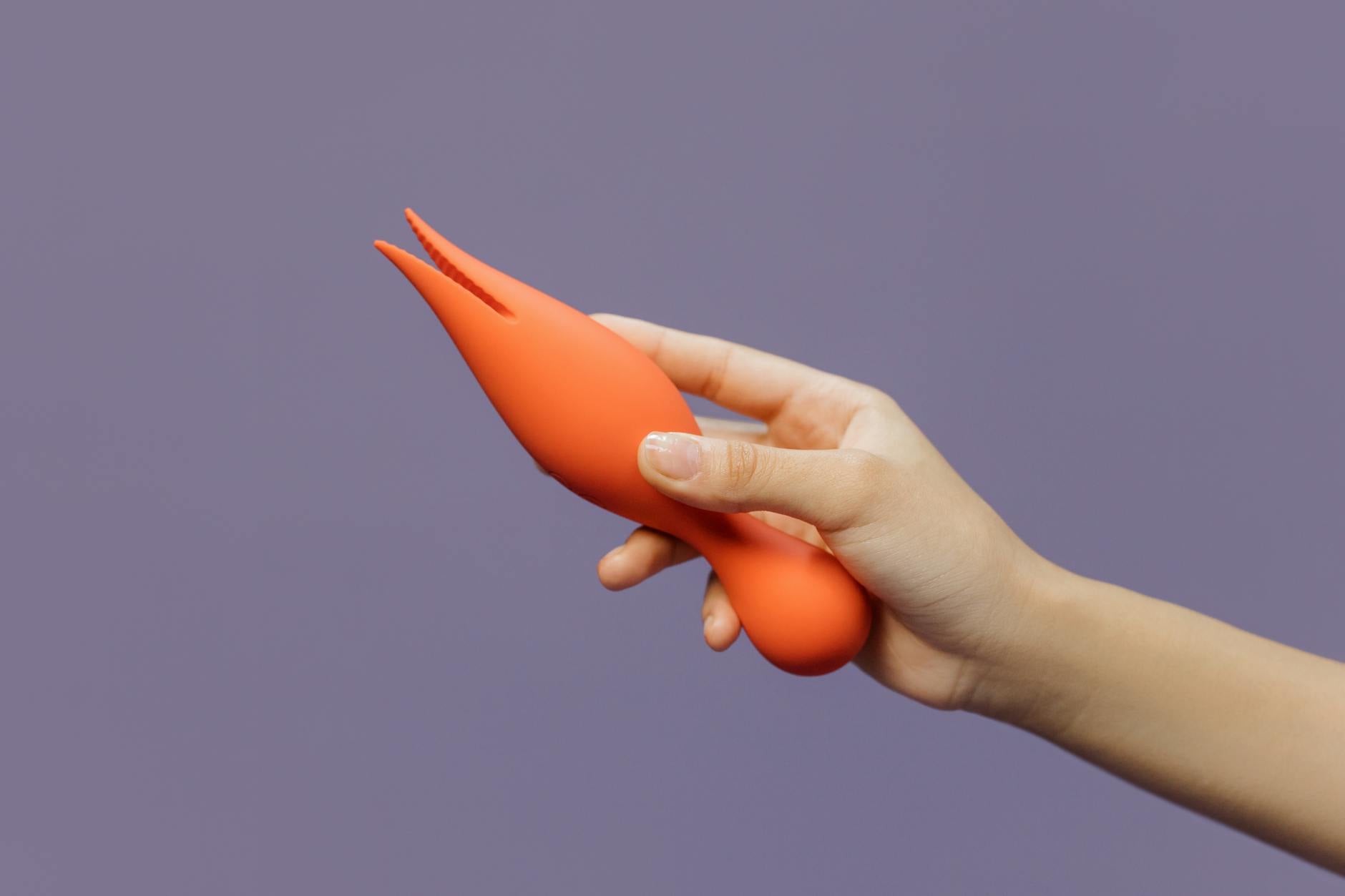
Here's the honest part: they're not the same
Let's be real. If you've only ever used a traditional vibrator, you might assume all vibrators work basically the same way. They don't. The difference between a lemon clitoral vibrator and a standard vibrating toy isn't just marketing. It's neurology.
A lemon vibrator uses suction stimulation. A traditional vibrator uses mechanical vibration. These activate different nerve pathways and create sensations that feel so completely different that calling them both "vibrators" is almost misleading. The question isn't which is objectively better. It's which one is better for your body, your nervous system, and what you're actually trying to experience.
How traditional vibration works
A standard vibrator moves back and forth at a set frequency (usually between 50 and 100 hertz). This friction creates stimulation across a broader surface area. The sensation builds through repetitive movement, like tapping or buzzing against the skin.
This feels good. For a lot of people, traditional vibration is exactly what they need. It's direct, predictable, and it gets the job done.
But here's what it doesn't do: it doesn't create suction. It doesn't pull. It doesn't generate that distinctive sensation of pressure and release.
How suction stimulation works (and why it feels different)
A lemon vibrator creates rhythmic suction using a gentle pulse pattern. Instead of vibrating side-to-side, the toy cups around the clitoris and creates waves of gentle pressure. Your nerve endings experience this as a pulling sensation, not a buzzing one.
The clitoris has roughly 8,000 nerve endings concentrated in an incredibly small area. A traditional vibrator stimulates these nerves through friction. Suction stimulates them through negative pressure. Your brain registers these as fundamentally different signals.
In research on pleasure responses, suction and vibration activate overlapping but distinct neural pathways. Some people find suction creates a fuller, more rounded sensation. Others describe it as more building, like waves rather than rapid taps. And critically, many people find suction easier to sustain without numbness or overstimulation.
The sensitivity and comfort angle
Here's something I see often in my practice: people abandon traditional vibrators because the direct friction becomes too intense after a few minutes. The clitoris is exquisitely sensitive. Too much repetitive vibration can feel almost raw or numb-inducing, especially for people with naturally sensitive tissues or anyone taking medications that affect nerve sensation.
Suction tends to feel gentler and more sustainable. Instead of concentrated friction on a tiny area, the sensation spreads across the whole cup. This means you can often use it longer without that "too much" feeling kicking in.
If you're someone who's struggled with vibrators feeling harsh, or if you've found yourself avoiding them because they overstimulate you, a lemon clitoral vibrator might completely change your experience. The difference isn't subtle. It's genuinely transformative for a lot of people.
The speed and intensity spectrum
Here's where technique matters. A traditional vibrator usually has a speed dial. Higher speed equals more intense sensation. With many users, this becomes an either-or situation. You're either going with it at an uncomfortable intensity or backing it down.
A quality lemon vibrator (like the Hello Nancy Lem) typically offers multiple pattern options that vary the pulse rhythm rather than just cranking up raw intensity. This gives you more granular control. You can adjust the sensation without it suddenly feeling aggressive.
Many people find they can build arousal more gradually and intentionally with suction patterns. The rhythm becomes almost conversational with your body instead of just pushing toward orgasm. Some people never want that. Others find it makes the entire experience more connected and pleasurable.
The orgasm question
This is where individual variation gets real. Some research and clinical observation suggests that suction can create different types of orgasms compared to traditional vibration. People sometimes describe suction-based orgasms as deeper, more full-body, or taking longer to build. Vibration-based orgasms often feel quicker, more surface-level, sometimes more intense in a concentrated way.
But here's the thing: your body might strongly prefer one, or you might genuinely enjoy both depending on the day, your cycle, stress levels, or what's happening in your relationship. There's no universal "better." There's only what feels better to you.
That's actually the most useful framing. Stop asking which is objectively superior. Start experimenting with what your nervous system prefers.
Cost and access considerations
Traditional vibrators range wildly in price, from $20 to $200. Lemon clitoral vibrators and suction-based toys tend to sit in the $65-$99 range. They're an investment, but not outrageously so.
The real question is whether the difference matters enough to justify the upgrade. If you already have a traditional vibrator you love, there's no mandate to switch. But if you've been frustrated with traditional options or curious about whether something different might work better for your body, the price-to-pleasure ratio is actually pretty solid.
Combining both approaches
Honestly? A lot of my clients end up using both. Suction for everyday pleasure and building arousal. Traditional vibration for when they want something faster or more intense. Different situations call for different tools.
If you're partnered, this matters too. Introducing a lemon vibrator into partner play creates an entirely different dynamic than a traditional vibrator. The suction sensations often feel more collaborative and less isolating. It's another variable you can play with together rather than just an external tool.
The sensitivity factor: who finds suction most helpful
I notice suction particularly shifts things for:
People on antidepressants or other medications affecting sensation. Many SSRIs and other medications dull feeling. Suction sometimes penetrates that numbness better than vibration alone.
People with sensory sensitivities or pelvic pain. Vibration can feel aggravating. Suction creates pressure without the friction that triggers pain responses.
People rebuilding desire after loss, grief, or relationship rupture. The gentler, more building sensation helps reintroduce pleasure slowly rather than shocking the system back into responsiveness.
Anyone over 40 experiencing tissue changes. As tissues thin with age or hormonal shifts, suction often feels more comfortable than direct vibration on delicate areas.
None of this means traditional vibrators are bad. It just means suction is solving a different problem for these bodies.
The real differentiator: what your body actually wants
Here's my strongest recommendation: if you're curious, try it. Hello Nancy offers a straightforward return policy, so investing in a lemon vibrator to test the difference isn't a massive risk.
Use a traditional vibrator you already own a few times. Notice what you feel. Then switch to a suction toy and notice again. The difference becomes obvious almost immediately. You'll know whether suction is genuinely better for you or whether you prefer the sensation and speed of traditional vibration.
Your pleasure isn't a one-size-fits-all calculation. It's built on your unique nervous system, your body's responsiveness, what's happening hormonally, and honestly, what you're in the mood for on a given day. The more options you understand, the more intentional you can be about choosing what actually serves you.
FAQ: suction vs. vibration and other questions
Can you use suction vibrators with a partner?
Absolutely. In fact, many people find suction toys easier to incorporate into partner play because the sensation feels less isolating. Your partner can be involved in controlling the rhythm or intensity, and the gentler nature of suction often feels more collaborative.
Do suction vibrators work for people with low sensitivity?
Yes. Actually, some people with reduced sensation find suction more stimulating than traditional vibration because it engages a different nerve pathway. If vibration has never worked for you, suction is worth testing specifically because it might wake up sensation that vibration couldn't reach.
How long does it take to adjust to suction if I've only used traditional vibrators?
Usually a few minutes. The sensation is noticeably different right away. Most people either immediately feel the shift or realize within the first session whether this is their preference. It's not a learning curve the way some toys require.
Does suction feel better for achieving orgasm faster?
Not necessarily faster, but often feels easier to build toward. Some people report that suction creates a more accessible build-up to orgasm, while traditional vibration sometimes feels like it's either working or not. That said, individual variation is huge. Some people have faster orgasms with traditional vibration.
What if I've never had an orgasm or rarely have them?
Both suction and traditional vibration are worth trying, but start with suction if you're trying something new. The gentler, more sustainable sensation often feels less pressured. When pleasure feels accessible rather than elusive, orgasms often follow more naturally.
Is there a learning curve to using a lemon vibrator?
No. It's more intuitive than most traditional vibrators. You place it gently against the clitoris and let the suction do the work. There's no technique required. If anything, lemon clitoral vibrators are easier to use than devices requiring specific angling or pressure.
What actually matters
The honest answer to whether a lemon vibrator feels better than traditional vibration is: sometimes, for some people, absolutely. For others, traditional vibration is their preference and always will be. The research and clinical observation support that both create genuine pleasure through different mechanisms.
What matters is that you have options. Your body deserves experimentation and choice. If you're curious about how suction stimulation might feel different, the gap between wondering and knowing is remarkably small. Most people figure out their preference within minutes of trying it.
Your pleasure isn't about what's objectively best. It's about what works for your unique nervous system. The more you understand the different ways a toy can stimulate you, the more agency you have in choosing what actually serves your experience.
If you want to explore this further or have questions about which Hello Nancy toy might work best for your body and preferences, I'm here to help. Reach out anytime.
Sources & further reading
This article draws on clinical research into clitoral nerve physiology, pleasure neuroscience, and feedback from thousands of people who've used both suction and traditional vibration toys. Key insights come from sex educator and researcher Emily Nagoski's work on pleasure responsive systems, as well as published research on sensory nerve pathways in erogenous tissue. For more on how different stimulation types affect nervous system response, our guide on how to use a lemon vibrator for better sensitivity when taking SSRIs explores medication-specific considerations in detail.