Postpartum pleasure isn't talked about nearly enough
Every pregnancy guide tells you about recovery timelines, pelvic floor rehab, and when you're cleared for penetration. Almost none of them mention that sensation itself changes after birth. Swelling fades. Stitches heal. And then you're left wondering why touch feels different, why arousal takes longer, why your body seems to have rewired itself without asking permission.
The truth is more straightforward than the silence suggests: your nervous system just spent nine months and then hours of labor in overdrive. Your pelvic floor muscles are fatigued. Your nerve endings are temporarily desensitized from stretching and trauma (yes, even uncomplicated births are a form of trauma to the body). Your hormones are recalibrating. And your mental space is flooded with new-parent exhaustion.
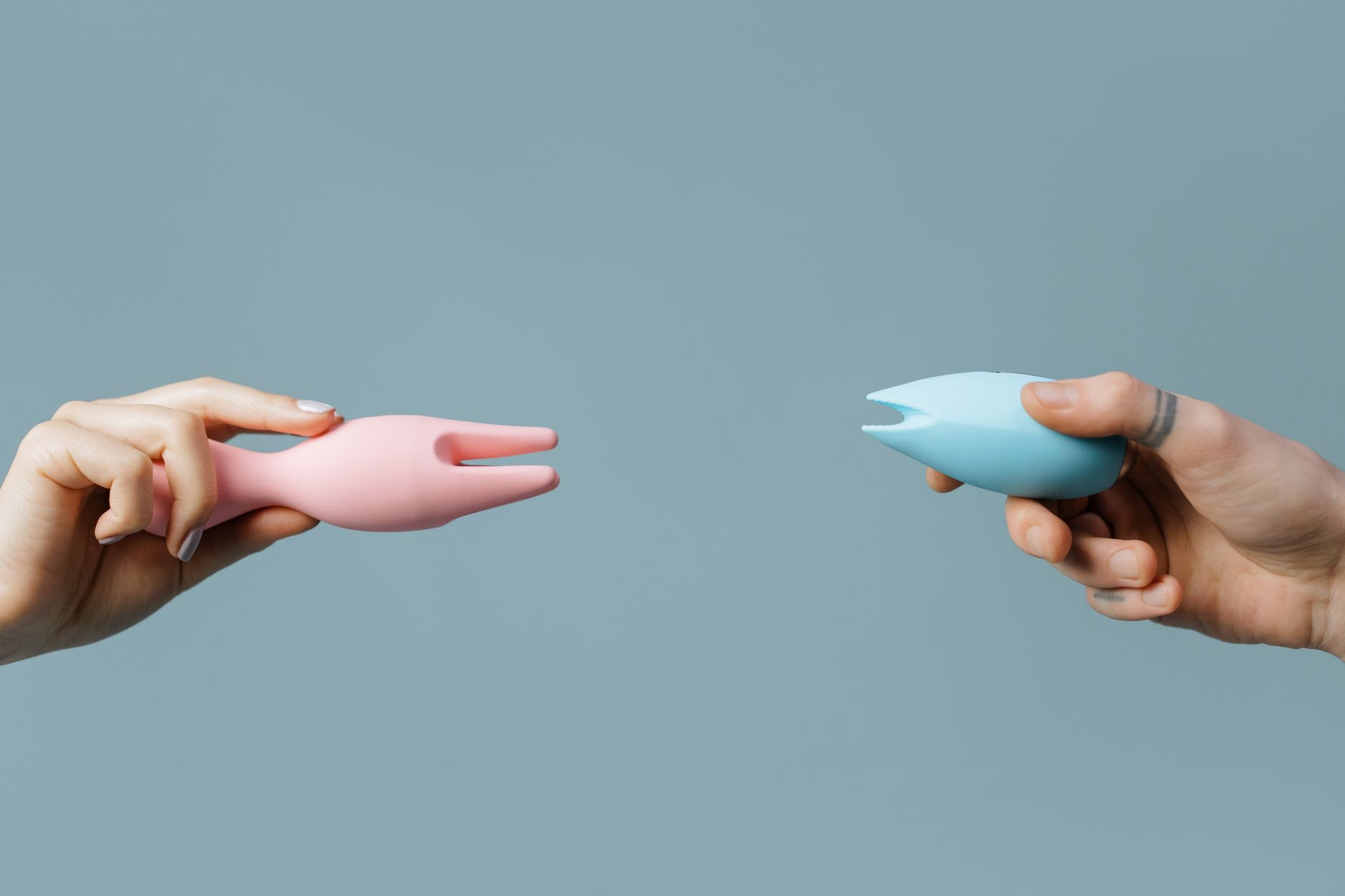
Clitoral vibrators like those from Buy Lemon Clit work differently than your hands or a partner's touch during this window. They're not a substitute for healing. They're a tool for meeting your body where it actually is.
What actually happens to sensation after birth
Let's separate the immediate recovery (weeks 1-6) from the longer rebuild (weeks 6-12 and beyond).
In those first six weeks, you shouldn't be exploring pleasure at all. Your perineum needs rest. Your uterus is involuting. Your hormones are shifting dramatically. This is not the time to test sensation.
But around six weeks, when you're cleared by your provider and bleeding has mostly stopped, something interesting happens: you might want to feel pleasure again. The desire can return before the capacity does. Your clitoris may feel numb, oversensitive, or both at different times. Some people report that direct touch feels almost painful. Others say they feel nothing at all.
This isn't permanent. It's inflammation, hormonal fluctuation, and neurological recalibration. But knowing it's temporary doesn't make it less frustrating in the moment.
Why lemon vibrators specifically help recovery
Regular vibrators deliver consistent, intense stimulation. That's useful for a lot of situations. But after childbirth, intense often feels overwhelming or unpleasant. Your nerve endings are raw.
Clitoral suction vibrators (the core technology behind Buy Lemon Clit's devices) work by creating gentle pressure waves rather than direct vibration. The sensation is diffused across a larger area of tissue instead of hammering one focal point. For postpartum bodies, this matters enormously.
Here's what that translates to in practice: you can start on the lowest intensity settings and build slowly. The sensation reaches your nerve endings without aggressive stimulation. You're not forcing arousal. You're inviting it gently.
Better still, suction stimulation tends to feel less "buzzy" and more like a sustained pressure that builds naturally. Many postpartum people find this mimics their body's own arousal pattern more closely than traditional vibration does.
Timing and setting matter more than the tool
Technically you can explore pleasure once you're cleared by your provider, but logistics matter. If you're alone, that's ideal. If you have a partner, you might need to schedule it like you would a doctor's appointment (which honestly, many parents are doing at this stage anyway).
The environment should be quiet, warm, and free from interruption. New parent bedrooms often come with a baby monitor and the constant threat of being needed in three minutes. That tension lives in your nervous system and blocks arousal.
Timing your exploration around your partner's night on duty, or waiting until someone is watching the baby for a solid hour, isn't romantic. But it's realistic, and it works. Arousal after childbirth is harder to access when your brain is literally waiting for a cry.
When you do have that window: start with no goal. Set the lemon vibrator to the lowest intensity. Explore. Your body will tell you what it wants. Many people find they need 20-30 minutes of gentle contact before sensation fully wakes up.
The psychological piece matters as much as the physical
Your body just did something extraordinary. It also probably feels foreign to you right now. Your breasts are serving a different purpose. Your belly looks different. Your pelvic floor is rearranged. Your hormones are bottoming out (especially if you're breastfeeding).
This is a legitimately hard time to feel sexy or connected to pleasure. It's normal to feel disconnected from your body. It's also completely fixable, but not by willpower.
Using a clitoral vibrator early in your postpartum recovery is partly about sensation recovery, sure. But it's also about reconnecting with the fact that your body still belongs to you. That pleasure is still available to you. That desire doesn't disappear just because you're now responsible for another human's survival.
Some partners want to jump back into sex immediately. Some partners have checked out entirely. <a href="/blog/how-to-use-lemon-vibrator-for-pleasure-when-partner-has-different-desire-levels">Managing different desire levels after a major life change requires its own conversation</a>. Solo exploration with a lemon vibrator gives you baseline information: what does pleasure feel like in this new body? What intensity works? How long does arousal take? That intel is valuable whether you're rebuilding solo or with a partner.
Practical steps for safe, supported recovery
First: confirm with your provider that you're healed enough to try. Infection risk is real. Pain is a signal to stop.
Second: wash everything thoroughly. A new vibrator, your hands, the area. Postpartum immune systems are weird, and you're not trying to introduce bacteria into any healing tissue.
Third: use water-based lubricant. Your body may not produce as much natural lubrication yet, especially if you're breastfeeding. This isn't a reflection of arousal level. It's a hormonal thing. Lube is your friend.
Fourth: start low. The lowest intensity setting on a quality clitoral vibrator is genuinely gentle. You can always turn it up. You can't un-feel too-intense stimulation.
Fifth: give yourself permission to feel nothing. Some days your nervous system isn't ready. Some days the baby will cry at minute two. Some days you'll discover you need something different than you thought. All of that is fine. You're not failing at recovery. You're gathering information.
When sensation recovery stalls
Most postpartum sensation recovery happens in the first 3-6 months. But for some people, numbness or reduced sensitivity lingers beyond that window.
If you're consistently feeling nothing even with gentle exploration, talk to your pelvic floor physical therapist or your OB/GYN. Sometimes residual swelling, scar tissue, or nerve irritation needs professional attention. <a href="/blog/how-to-use-lemon-vibrator-for-pleasure-after-pelvic-floor-surgery">Pelvic floor therapy combined with gentle vibrator use can be transformative</a>, but only if someone trained has assessed what's actually going on.
If sensation is present but arousal feels like an uphill climb, that could be hormonal (especially if you're breastfeeding), psychological (the new parent stress is real), or relational. All three often overlap. A therapist who specializes in postpartum mental health can help you sort the threads.
The clitoral vibrator as part of your toolkit
Your body after childbirth isn't broken. It's different. And it's recovering. Using a lemon vibrator isn't a shortcut past the healing process. It's a way of supporting your own pleasure during a season when your body feels less like yours and more like it belongs to an infant.
Start gentle. Give yourself time. Listen to what your body actually needs instead of what you think it should need. And know that sensation recovery, like everything postpartum, is not linear. Some days will feel better than others. That's how bodies work when they've been through something massive.
Your pleasure matters. Your recovery matters. And the tools that support both of those things—whether that's professional care, a supportive partner, your own hands, or a thoughtfully designed clitoral vibrator—deserve space in your postpartum story.
People also ask
When can you safely use a vibrator after giving birth?
Most providers clear you for vaginal penetration and sexual activity around 6 weeks postpartum, assuming an uncomplicated delivery and no infection. That's typically when clitoral exploration becomes safe as well. But every person heals differently, and every birth is different. If you had tearing, a complicated delivery, or infection, your timeline may be longer. Check with your OB/GYN before exploring, even if you're past the six-week mark.
Does using a clitoral vibrator affect breastfeeding?
No. Your breasts and your clitoris have separate nerve pathways and hormonal systems. Clitoral stimulation doesn't change milk production or affect your ability to nurse. That said, if you're extremely engorged or dealing with mastitis, direct breast contact of any kind might feel uncomfortable. In that case, wait until your breasts are healing better before exploring.
Why does everything feel numb after childbirth?
Your pelvic floor muscles just stretched enormously. The tissue swelled. Your nerves were compressed or irritated. Your hormones (especially estrogen) dropped dramatically after delivery. All of this creates temporary desensitization. Add sleep deprivation and constant physical demands, and your nervous system is genuinely overwhelmed. Sensation typically recovers as swelling decreases and hormones stabilize, usually between 2-6 months postpartum.
Is it normal to not feel sexual desire postpartum?
Completely normal. Postpartum hormones suppress libido. Sleep deprivation tanks desire. The psychological weight of new parenthood is massive. Your body has also been through a major medical event. Desire often returns gradually as you sleep more, hormones rebalance, and you start to feel like yourself again. This can take months. Some partners' desire returns faster than others. All of this is within normal range.
Can using a vibrator help rebuild desire after birth?
Sometimes. If numbness or low sensation is the barrier, gentle exploration can help rewaken your nervous system to pleasure. That in turn can help desire return. But if desire is suppressed by hormones or exhaustion, no vibrator is going to fix that. In those cases, the rebuild needs to happen on multiple fronts: more sleep, partner support, possibly therapy, and patience with yourself.
Should my partner use the vibrator on me or should I do it myself?
That's entirely up to you and what feels right for your body and your relationship. Some postpartum people find partner exploration deeply reconnecting. Others need solo time to remember what their own pleasure feels like without anyone else's expectations. Neither is better. What matters is what supports your recovery and your sense of your own body. If you're unsure, start solo and decide from there.