Here's the thing nobody tells you about hormonal birth control
You go on the pill, patch, or ring to prevent pregnancy. What nobody mentions is that it might also prevent orgasms. Or at least make them feel a lot farther away than they used to.
Birth control doesn't cause numbness the way a dental injection does. It's subtler. Your body still responds, but the volume gets turned down. Arousal takes longer to build. Orgasms feel softer, less intense, sometimes barely there. Partners notice the change before you do.
If this sounds familiar, you're not alone. Studies suggest 20 to 40 percent of people on hormonal contraceptives experience some degree of sensation loss or decreased arousal. That's not a small number. And it's not in your head.
Why hormonal birth control affects sensation
Hormonal contraceptives work by suppressing the hormones that drive your menstrual cycle. That's the whole point. But those same hormones—estrogen and progesterone—also fuel arousal, blood flow to genital tissue, and the neurological chain reaction that leads to orgasm.
When you suppress those hormones, you're not just preventing ovulation. You're also changing:
- Blood flow to genital tissue. Estrogen keeps vaginal and clitoral tissue engorged with blood during arousal. Less estrogen means slower engorgement and less sensitivity.
- Vaginal lubrication. The mucous membranes get thinner and drier, which affects sensation and comfort.
- Dopamine and oxytocin. These neurotransmitters drive desire and orgasm. Hormonal shifts can lower both.
- Clitoral nerve sensitivity. This is the one that matters most for pleasure. Some people experience measurable decreases in clitoral sensation on hormonal birth control.
None of this is permanent. But it's real, it's frustrating, and most doctors skip over it in the side-effects chat.
The lemon vibrator approach: amplification, not forcing
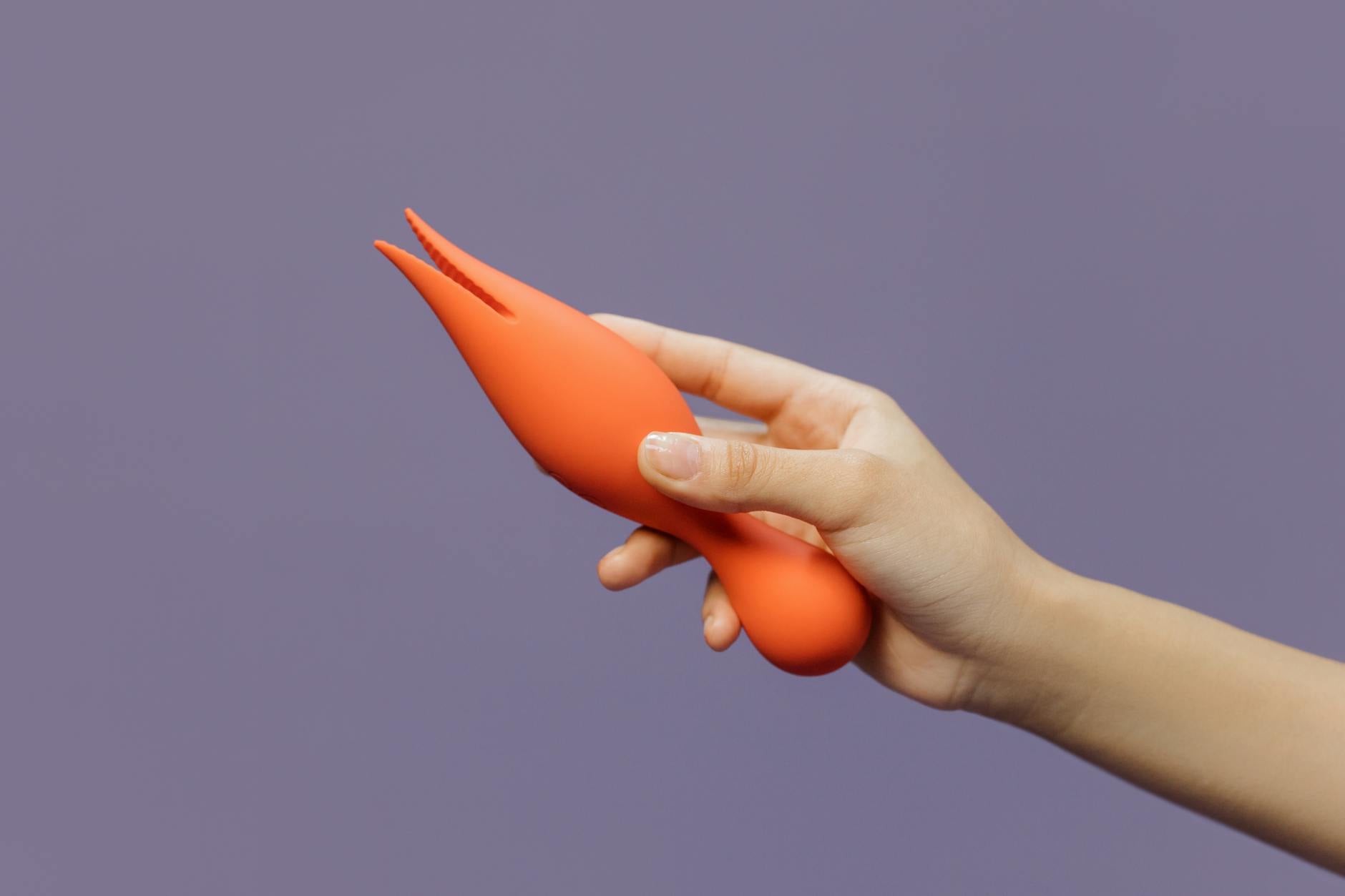
Lemon vibrators, like the Lem, work differently from regular vibrators. Instead of straight vibration, they use air-suction stimulation—a pattern that mimics the way many people naturally touch themselves. This matters when sensation is already dulled.
Here's why air-suction helps where standard vibration sometimes doesn't:
1. It focuses stimulation more precisely. Air-suction devices create a seal and apply pressure to a concentrated area. For someone with reduced sensation, that focused stimulation is easier to feel than diffuse vibration spread across a wider surface.
2. It triggers a different nerve pathway. Suction activates mechanoreceptors and pressure-sensitive nerves in ways that pure vibration alone doesn't. You're essentially waking up a secondary arousal pathway when the primary one is quiet.
3. It's easier to build sensation gradually. The Lem has multiple intensity levels. You can start at a barely-there suction and work up. Many people find this buildable intensity helps their arousal arc feel more natural.
4. It avoids numbness fatigue. If you're already struggling to feel sensation, harsh vibration can become exhausting rather than pleasurable. Air-suction tends to feel more sustainable.
How to actually use a lemon vibrator on birth control
Three practical shifts make a real difference:
Start lower than you think you need. If you've been on hormonal birth control for a while, your baseline arousal is already lowered. You might think you need intensity 4 or 5 right away. Try starting at intensity 1 or 2 and spend five minutes there. The goal is to notice sensation, not chase intensity.
Give your body longer to respond. Birth control delays arousal. Budget 15 to 25 minutes of foreplay or solo time before you expect to feel much of anything. Then use the lemon vibrator. This isn't laziness or something wrong with you. Your body just needs more time to wake up.
Experiment with positioning and angle. The clitoris isn't just the visible button. It's a whole structure that extends internally. Angle the Lem slightly to explore different parts of your external clitoral tissue. Many people find that shifting angle by even 10 degrees unlocks sensation they couldn't access before.
Combine it with mental focus. Sensation loss from birth control is partly physical and partly attentional. Your brain stops expecting pleasure, so it stops looking for it. When you use a lemon vibrator, actually focus on the sensations rather than letting your mind wander. It sounds simple. It changes everything.
Photo by DRT.fm on Pexels
The conversation with your partner (if you have one)
If you're in a relationship, the numbness from birth control often becomes a shared problem. Your partner notices you're less responsive. They might feel rejected or assume they're doing something wrong. The frustration compounds.
Here's what actually helps: separate the two conversations. One conversation is about your body's physical response to medication. That's not about your partner. It's about your biology. The second conversation is about what you both want sexually and how to get there together.
Most people confuse these. They start talking about sensation loss and it becomes a conversation about attraction or desire, which it isn't. Your desire is fine. Your body's medication is making sensation harder to access.
If your partner is in the room when you use a lemon vibrator, that's a different thing entirely. But if you're using it solo first to rebuild your own sense of what pleasure feels like, you don't need permission or explanation. You need information.
When to talk to your doctor
If sensation loss is severe—you're not having any orgasms where you used to, or sex feels uncomfortable—mention it. Most doctors will offer three options:
1. Try a different contraceptive. Sensation effects vary by method and dosage. Some people tolerate the patch better than the pill. Others do better with lower-hormone options or non-hormonal methods like the copper IUD. It's worth asking.
2. Adjust the dose. Some birth control methods come in different hormone strengths. A lower dose might preserve more sensation.
3. Accept the tradeoff and optimize for pleasure elsewhere. If birth control is the right choice for you for other reasons, you don't have to sacrifice pleasure. But you do need tools and strategies to work around the sensation loss.
A lemon vibrator fits squarely into that third category. It's not a workaround. It's a tool that helps your body access sensation when medication makes it harder.

Photo by Anna Shvets on Pexels
The timeline: what to expect
Sensation doesn't come roaring back overnight. But here's what many people notice:
Week 1-2. You start exploring with the lemon vibrator at lower intensities. Sensation feels faint, almost theoretical. You're building a practice, not chasing pleasure yet.
Week 3-4. Your nervous system starts recognizing the pattern. You might notice arousal starting a little faster. Orgasms begin to feel slightly more tangible.
Month 2-3. Real shift. Arousal builds more naturally. Orgasms feel closer to your baseline before birth control. Not identical, but recognizable.
If you're not feeling any change after a month of consistent use, talk to your doctor. The issue might not be birth control sensitivity. It could be medication interactions, stress, relationship dynamics, or something else entirely.
One more thing about lemon clitoral vibrators and hormonal shifts
If you switch birth control methods or eventually come off hormonal contraception entirely, your sensation baseline will change again. When that happens, you might need to adjust how you use your lemon vibrator. You might find you want higher intensities, or shorter warm-up time, or a completely different approach.
That's not the toy failing. That's your body responding to changing chemistry. A good toy adapts with you. That's why people keep theirs for years.
Your pleasure isn't less valid because hormonal birth control makes it harder to access. It just requires a different strategy. A lemon vibrator is one part of that strategy. The other parts are patience, information, and permission to explore what actually works for your body right now.
People also ask
Can a lemon vibrator help with sensation loss from other medications?
Yes, but with caveats. Antidepressants, blood pressure medication, and some antihistamines can all affect arousal and sensation. A lemon vibrator might help the same way it does with birth control, but the underlying cause is different. If you're on multiple medications and experiencing sensation loss, talk to your prescribing doctor before assuming it's all hormonal.
How long does sensation numbness from birth control usually last after you stop?
It varies widely. Some people notice changes within weeks of stopping. Others take months. Hormones regulate a lot more than just arousal, so your body might need time to recalibrate. A lemon vibrator stays useful during this transition period too.
Is there a specific lemon sucker technique for sensation loss?
The main shift is patience with lower intensities. Many people with reduced sensation start too high and never feel anything. Begin at intensity 1, stay there for five minutes, then gradually increase. Let your body tell you when to turn it up, not the device itself.
Can you use a lemon vibrator with a partner while on birth control?
Absolutely. Some couples use them together as foreplay. Others use them solo to rebuild individual sensation, then bring that back to partnered sex. Both work. The key is communication about what you're trying to accomplish.
Will my sensation come back completely if I keep using a lemon vibrator?
Not necessarily. If birth control is the root cause, your sensation might stay somewhat muted while you're on it, no matter what tools you use. A lemon vibrator helps you work with what you have, not override the medication's effects. Real restoration might require adjusting your contraception.
How do I know if sensation loss is from birth control or something else?
Timing matters. Did sensation change soon after starting birth control? If yes, that's a strong signal. If you've been on the same birth control for years and just now lost sensation, something else might be going on. Either way, talking to a healthcare provider helps clarify.