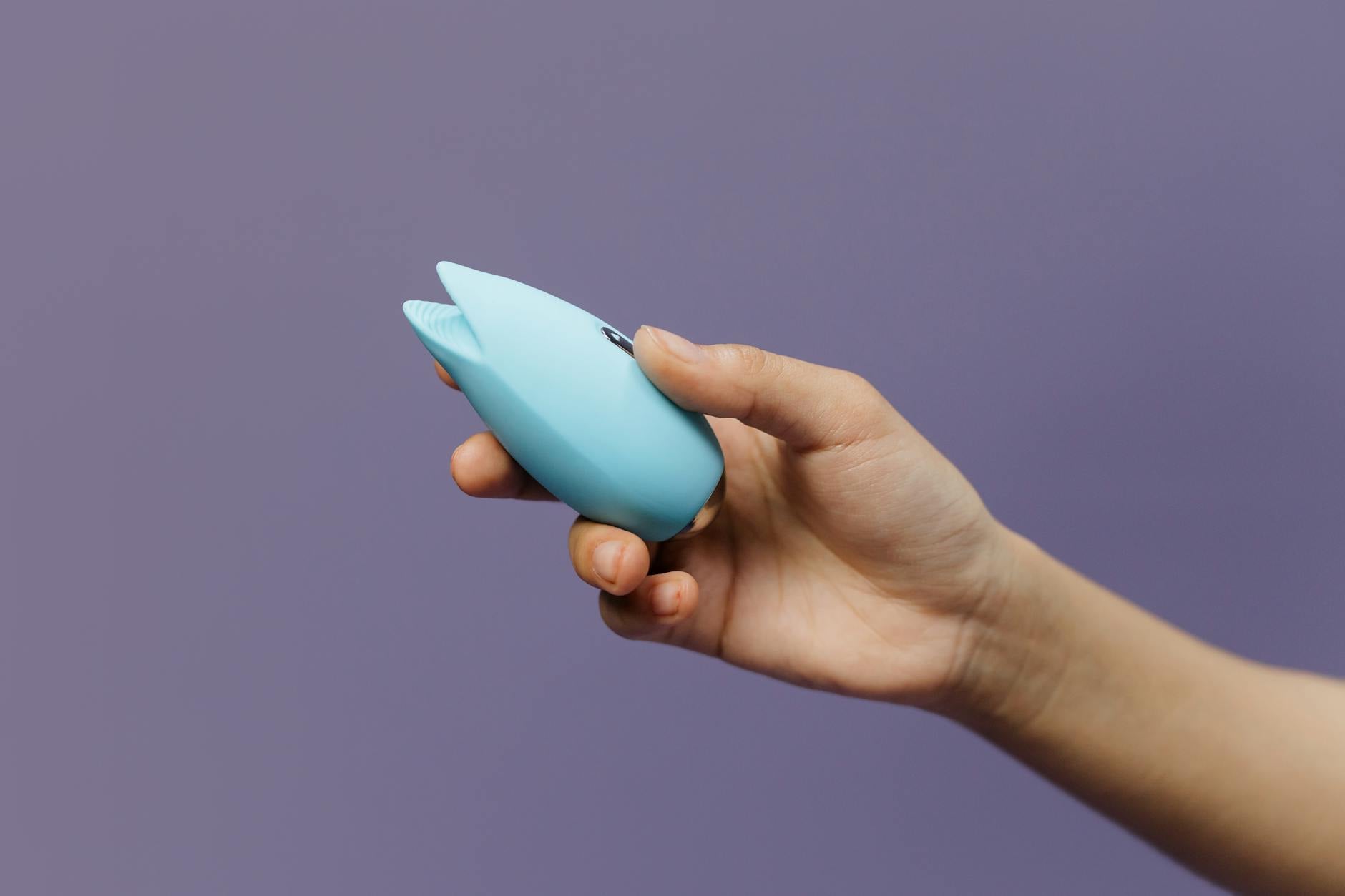
Let's be honest about anxiety and sex
Anxiety doesn't just kill the mood. It kills arousal at the biological level. Your nervous system locks up, your blood vessels constrict, and your brain stops releasing the neurochemicals you need to feel pleasure. When you're stuck in fight-or-flight mode, your body literally cannot access arousal. That's not a personal failure. That's physiology.
The problem is that most advice about this tells you to "relax" or "think sexy thoughts," which is about as useful as telling a person with a broken leg to think about running. Here's what actually works: a tool that bypasses the thinking part and speaks directly to your nervous system through sensation.
That's where the lemon clitoral vibrator comes in. And I'm not being poetic. There's real neurology behind why suction-based stimulation works better than traditional vibration when anxiety is in the driver's seat.
How anxiety disrupts arousal
When you're anxious, your sympathetic nervous system dominates. This is your body's gas pedal for stress. Your heart rate goes up, your breathing gets shallow, and blood flows away from your genitals toward your limbs (an evolutionary response to help you fight or flee). Simultaneously, cortisol and adrenaline spike, while dopamine and serotonin, which fuel desire, drop.
Arousal requires your parasympathetic nervous system. Your body's brake pedal. In parasympathetic mode, your heart slows, breathing deepens, and blood flows toward your genitals. This is when your body can actually feel pleasure.
The issue isn't willpower. Your nervous system is literally on the wrong setting.
Why lemon vibrators work differently for anxiety
Traditional vibrators use pure vibration. They're fast, mechanical, and they require your brain to interpret the sensation and decide it's sexy. When anxiety is present, your brain is still in threat-detection mode, so the signal doesn't land.
A lemon sucker works through pulsing suction. This does three things anxiety cannot override:
First, it creates rhythmic sensory input. Your nervous system responds to rhythm at a subcortical level. That means your brain's prefrontal cortex (where anxiety lives) doesn't get a vote. Rhythm bypasses worry.
Second, it produces a broader stimulus pattern. Suction stimulates a wider range of nerve endings across the clitoris at once. This creates a more complete, immersive sensation that's harder for your anxious brain to discount as background noise.
Third, it triggers a gentle parasympathetic shift. Slow, rhythmic sensory input activates the vagus nerve, which signals your nervous system to downshift. Within a few minutes of using a lemon clitoral vibrator, many people report their breathing naturally slows and their shoulders drop.
In other words, a lemon vibrator doesn't ask your brain for permission to feel good. It tells your nervous system directly.
The five-step reset protocol
Here's how to use a lemon vibrator to pull yourself out of anxiety-driven arousal shutdown.
Step 1: Set yourself up for parasympathetic activation. You can't think your way into calm, but you can engineer conditions that support it. Dim the lights. Put your phone out of reach. Temperature matters too. A slightly cool room (around 65-68 degrees) helps. Warmth promotes relaxation, but it can also make anxiety spike because your body interprets overheating as a threat signal. Cool is safer.
Step 2: Breathe before you touch yourself. Five minutes of deliberate breathing shifts your nervous system. The specific pattern: breathe in for four counts, hold for four, exhale for six. The longer exhale is what signals your parasympathetic system to engage. Do this five times. Your job is not to feel sexy yet. Your job is just to change your physiology.
Step 3: Start on a very low pattern. On a lemon sucker, that's pattern 1. You might be used to jumping straight to intensity 4 or 5 when you're not anxious. Don't. When anxiety is present, your nervous system is hypersensitive to stimuli. A pattern that feels gentle to a calm person feels overwhelming to an anxious one. Start where you'd normally think "this is too weak" and stay there for two to three minutes. Let your body acclimate.
Step 4: Let sensation lead, not intention. This is crucial. You're not trying to have an orgasm. You're not performing. You're just noticing what the vibration feels like. Where does it feel strongest? Does it change if you angle the toy slightly? What happens if you pause for ten seconds and restart. This sensory curiosity is antithetical to anxiety. Your anxious brain cannot simultaneously worry and pay attention to physical sensation. Whichever you focus on wins.
Step 5: Progress only when your body is ready. Maybe you increase the pattern. Maybe you don't. Maybe you use the lemon vibrator for five minutes and stop. That's totally fine. When you're coming from anxiety, the goal isn't the orgasm. The goal is reconnecting with your capacity for pleasure. That's the win.
The role of consistency
One session won't rewire your nervous system. But using a lemon clitoral vibrator three to four times per week over two to three weeks creates real change. Here's why.
Each time you successfully shift from anxiety to parasympathetic activation through sensation, you're training your nervous system. Your brain creates new pathways. "Oh, I remember this feeling now. My body CAN feel pleasure even when my mind was spinning." After enough repetitions, the transition gets faster. Within a month, many people find that arousal returns more easily even without the toy.
This is called nervous system recalibration. It's the same mechanism therapists use in trauma work. Rhythmic, safe sensation slowly teaches your body that you can relax.
What helps between sessions
The lemon vibrator is a tool, not a substitute for addressing the underlying anxiety. Between using it, pay attention to what's actually triggering your stress. Is it work overload? Relationship tension? Sleep deprivation? Health anxiety?
If you can't identify the source, that's okay. Not all anxiety has a logical cause. But the more you can reduce the overall stress load, the easier it is for your arousal to come back on its own.
Walk outside for ten minutes. That actually works. Cold water on your face for ten seconds resets your nervous system faster than almost anything. Strength training helps enormously because it gives your sympathetic system a legitimate "workout" to do, which then allows parasympathetic recovery. And sleep is non-negotiable. Most anxiety-driven arousal problems get dramatically better with just one extra hour of sleep per night.
When anxiety is a symptom of something else
Sometimes anxiety that blocks arousal is actually depression. Sometimes it's hormonal. Sometimes it's a side effect of medication. If you've been using a lemon sucker regularly for three weeks and seeing zero improvement, that's worth mentioning to a therapist or doctor.
Specific things to rule out: thyroid dysfunction, ADHD (executive dysfunction and anxiety often travel together), hormonal contraceptives that increase baseline anxiety, and SSRI side effects that mimic anxiety but are actually something else entirely.
You're not broken. You're just collecting information about what your body needs.
People also ask
Can a lemon vibrator actually reduce anxiety, or does it just distract from it?
It's both. In the moment, the focused sensation does distract your anxious brain from worry spirals. But over time, with consistent use, you're actually retraining your nervous system. The parasympathetic activation that happens during use becomes easier to access on its own. You're not just getting a break from anxiety; you're building resilience. Many of my clients report that after a few weeks of regular use, they feel calmer throughout the day, not just during solo play.
Should I use a lemon clitoral vibrator if I have performance anxiety with a partner?
Absolutely. But differently. Solo use with a lemon sucker helps your nervous system remember what pleasure feels like without anyone watching. That's where you rebuild your confidence. Once you've done that work alone, you're much more likely to access arousal with a partner. If you want to eventually use it together, that's a separate conversation that requires communication about boundaries and expectations.
How is a lemon vibrator different from a regular vibrator for anxiety?
Speed and pattern. Traditional vibrators are often high-frequency and require constant mental engagement to feel good. They can actually amplify anxiety in some people because the intensity demands attention rather than soothing it. A lemon sucker's pulsing rhythm is slower and more meditative. It doesn't ask your brain for permission. It just rhythmically signals your nervous system to calm down. Some people find that the suction sensation is more grounding than vibration alone.
What if I'm on anxiety medication? Will that affect how the toy works?
Medication might actually help. Certain SSRIs dampen arousal, but others don't. Some anti-anxiety medications make it harder to orgasm. Others don't. The good news is that the parasympathetic activation a lemon vibrator provides works alongside medication. If your medication is keeping you in fight-or-flight, the toy is just helping tip the scales back toward calm. If your medication has sexual side effects, you might want to talk to your prescriber about timing or alternatives, but the toy itself isn't contraindicated.
How long does it take to feel a difference?
Most people notice a shift in their body's responsiveness within two to three sessions. Real nervous system recalibration takes three to four weeks of consistent use. If you're using a lemon clitoral vibrator and you're not seeing improvement after a month, that's not a failure of the tool. That's information that something else might be driving the anxiety.
Can I use a lemon vibrator if I have touch sensitivity from anxiety?
Yes, but cautiously. If you're experiencing tactile defensiveness (touch feels overwhelming), you'll want to start with the lowest pattern and keep sessions shorter, maybe just two minutes. The suction pattern actually feels gentler to many people with touch sensitivity than vibration does, because it's less rattling. Some people find that starting with external use only, nowhere near direct clitoral contact, helps their nervous system acclimate. There's no rush.
The bottom line
Anxiety is a nervous system state, not a character flaw or a sign you're broken. And it's responsive to the right tools. A lemon vibrator works for anxiety-driven arousal loss because it speaks to your nervous system in the language it understands: rhythm, sensation, and safety.
Start small. Be consistent. Pay attention to what your body needs. If you're struggling, that's what I'm here for. Reach out at /contact and let's figure out what's going on. Your arousal deserves to come home.