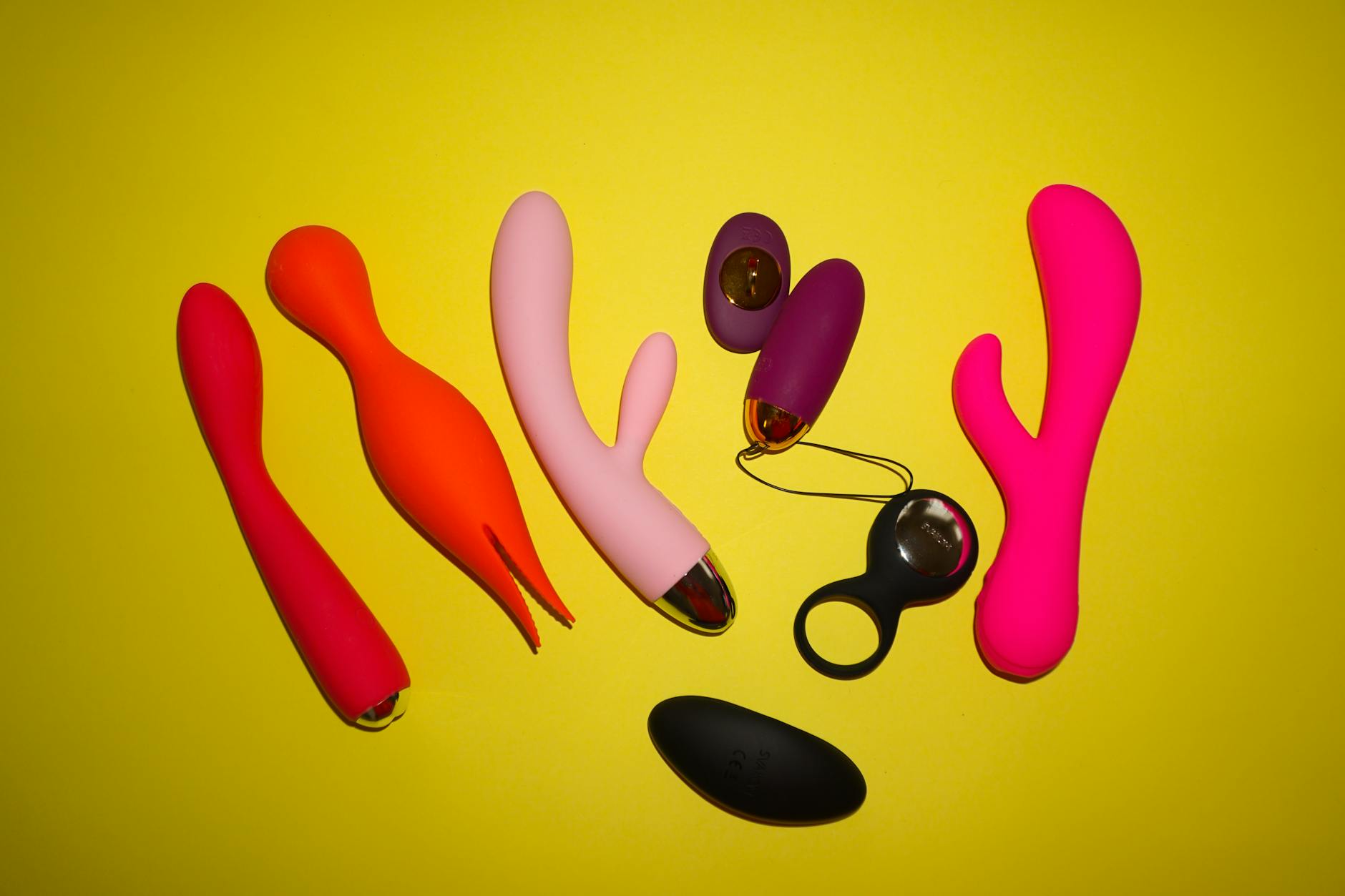
Let's be honest about disconnection
You don't have to be trauma-informed to know that many of us exist mostly in our heads. Work stress, phone notifications, family obligations, that conversation you replayed for three days. The body becomes something that carries the brain around, not a source of information or pleasure in its own right.
When you live that way long enough, reconnecting with physical sensation can feel like learning a foreign language. And here's the thing: a lemon vibrator is one of the most straightforward ways back.
Why sensation-focused practice matters
I'm not talking about forced mindfulness or meditation apps you'll abandon in a week. I'm talking about deliberate, curious exploration of what your body actually feels. Pleasure is information. It tells you where you are, what you like, what's shifted since last week.
Research on embodiment shows that people who can accurately read their own physical signals have better stress regulation, clearer decision-making, and lower rates of anxiety. That's not spiritual language. That's neuroscience. When you practice feeling, you literally rewire how your nervous system responds to the rest of your life.
A lemon clitoral vibrator works beautifully for this because it isolates one area of sensation. No pressure to perform. No goal-orientation. Just: What does this feel like right now?
Setting up the right environment
Disconnection thrives in noise. Before you touch a lemon vibrator, you need permission from your surroundings.
That means: a space where you won't be interrupted for 20 to 30 minutes. Not rushed. Not with one ear on the door. Phone on silent. If you live with others, a locked door is not paranoid, it's practical boundary-setting.
Lighting matters more than you'd think. Bright overhead lights feel clinical. Dimmed light or a single soft lamp creates space for your nervous system to settle. Temperature too. A little too cold and your body contracts. Bring a blanket if you need one.
This isn't luxury. This is you telling your nervous system: "You're safe to pay attention now."
The first session: pure observation
I tell my clients to approach the first few sessions like a slow experiment, not a performance.
Start with your lemon vibrator off. Hold it. What does the weight feel like? The texture? Silicone has a particular feel. Spend two minutes just getting to know the object in your hand.
Then, turn it to the lowest setting. Pattern 1. Most lemon sexual toys have multiple patterns and intensities. Start at the gentlest one. Touch it to your inner arm first. Wrist, forearm. What does that feel like? Weird? Good? Startling? All of those are data.
When you move to direct clitoral contact, go slowly. The clitoris is not uniform. The shaft is different from the glans. The outer labia are different from the inner folds. Let your vibrator map that landscape. This isn't about reaching an orgasm. It's about learning.
If nothing happens in 15 minutes, that's fine. End the session. Your body got information that you're curious about it. That's the whole point.
Building a map of your own sensation
Over 3 to 5 sessions, patterns will start to emerge.
You might notice that pattern 3 feels different from pattern 2 in a way you can't quite explain until you pay close attention. You might find that pressure matters more than speed. You might discover that direct contact on the glans gets old fast, but contact on the shaft with a light hand is endlessly interesting.
Write this down if you're a words person. Or just remember it. The point is: you're building an internal map. This is your body telling you what it wants.
Many people report that somewhere between session 4 and 8, they stumble into a sensation that feels different. Warmer. Deeper. Not necessarily a full orgasm. Just a shift into a different register. That's your nervous system learning that it can trust this activity. That's progress.
The role of rhythm and patience
One common mistake is assuming that more intensity equals more pleasure. That's rarely true, especially when you're reconnecting.
Your lemon vibrator probably has 5 to 10 intensity levels. You might spend entire sessions in levels 1 to 3. That's not settling. That's actually where the nuance lives. High intensity floods the nervous system. Low intensity allows you to feel texture, variation, the difference between one second and the next.
Patience is a skill. When you practice feeling, you're literally training your brain to slow down. That transfers everywhere. Eating becomes more interesting. Conversations feel more present. You're not distracted.
When connection deepens into pleasure
At some point, sensation might build into arousal. Then arousal might lead somewhere you didn't expect.
That's when you get to make a choice. Do you keep exploring? Do you build toward climax? Do you stay in the slow observation mode? All of it is right. Your lemon vibrator serves your intention, not the other way around.
What matters is that you're choosing. You're present. You're inside your body instead of watching it from above. That's the whole win.
Extending this into partnered time
Body awareness doesn't stay in your solo practice. It leaks into everything.
When you know what you feel, you can communicate it. You can tell a partner: "This pattern is interesting, but slower." Or: "I need 10 minutes of this before anything else." That specificity makes partnered sex dramatically better because you're not guessing anymore. You both are.
Some people bring their lemon vibrator into partnered sex. Others find that knowing their own map means they can guide a partner's hands with real information instead of polite performance. Either way, the tool served its purpose: it connected you to yourself.
Troubleshooting when nothing feels good
Here's what I hear sometimes: "I tried three times and it felt numb, or weird, or uncomfortable."
First: that's normal. Your body might need more sessions before sensation registers as anything other than "something strange is happening." Numbness often means your nervous system is in mild protection mode. Keep going, but slower.
Second: check your setup. Too much pressure? Too much intensity? Are you actually relaxed, or are you lying there tensing waiting for something to happen? Relaxation is not the same as laziness. It's active release.
Third: consider whether your body needs something different. Some people find that lemon vibrators work better in the shower. Some need manual warmup first. Some need to pair it with a specific fantasy or memory. Your body isn't broken if you need these tweaks. It's just being honest about what works.
The bigger picture
I work with couples who haven't had sex in years because they lost the ability to feel each other. The pathway back always starts with this: can you feel yourself? Can you tune into your own signals without judgment?
A lemon clitoral vibrator is just a tool. But it's a surprisingly powerful one because it's specific, it's safe, and it asks almost nothing except your attention. In a world designed to keep you distracted, that's radical.
Your body is not a problem to be solved. It's a source of information you've been trained to ignore. Reconnecting is worth the time.
People Also Ask
How often should I use a lemon vibrator for body awareness?
Start with two to three times per week, ideally spaced out so you're not in adjacent days. Your nervous system needs time to process what it's learning. More frequent isn't better. Consistency is. Once you've built that map over a few weeks, frequency matters way less because you already know what you're working with.
Can I use a lemon vibrator if I've never had an orgasm?
Absolutely. In fact, people who've never experienced orgasm often have the best success with the sensation-mapping approach because there's no goal pressure. You're not trying to reach something. You're just getting curious. If orgasm happens, it happens. If it doesn't, you've still learned something valuable about your body.
What if my partner doesn't understand why I need solo practice time?
That's a conversation worth having directly. You might say something like: "I'm learning about my own body and what I like. That's going to make our sex life better because I'll know what I'm asking for." If your partner struggles with that, that's worth exploring separately, maybe with a couples therapist, because it's usually not actually about the vibrator.
Is it normal to feel self-conscious during solo practice?
Yes. Shame and self-consciousness are learned. You grew up in a world that told you your body was either an ornament or a problem, rarely a source of neutral curiosity. That voice in your head saying this is weird or silly? It's just training. Keep going. It fades.
How do I know if I'm "doing it right"?
You're doing it right if you're paying attention. That's it. The goal is not an orgasm. The goal is not a specific sensation. The goal is building the capacity to notice what's actually happening in your body in this moment. If you can do that, you've succeeded, regardless of what else happens.
Can body awareness practice help with low libido?
Often, yes. Low libido frequently isn't about broken desire. It's about disconnection. When you reconnect to sensation, desire often follows. Not always immediately. But the pathway back to wanting sex often starts with the ability to feel your body as a source of good things, not just obligation or performance.
A final word
Reconnection is not a one-time project. Life will pull you back into your head. Stress will contract you. That's normal. The tool is there when you need to find your way back home to your body. That's what it's for.