
Here's the thing about new relationships and toys
You're nervous. They might be too. So you don't mention it. Then three months in, you're wondering if you'll ever actually come with them, and suddenly it feels too late to bring up. But it's not.
Introducing a lemon vibrator early, done thoughtfully, doesn't derail intimacy. It deepens it. It says, "I want to feel good, and I want to figure this out with you." That's vulnerable and sexy at the same time.
Why the timing actually matters
The research backs this up. Couples who introduce toys within the first few months of dating report higher satisfaction with their sexual connection overall. Not because the toy is magic, but because the conversation happens before resentment builds. Before they've memorized each other's bodies incorrectly.
The sweet spot is usually around month two or three. You've had sex a few times. You've established that you actually like each other. But you haven't calcified into a sexual routine yet. You're still in exploration mode anyway.
If you wait until month eight, suddenly it becomes a diagnosis: "This isn't working." If you mention it at week two, it can feel clinical. Month two to three sits in the Goldilocks zone where it reads as playfulness, not desperation.
How to start the conversation
Don't make it a serious talk. Seriously.
You don't need to sit down, make eye contact, and say, "We need to discuss my orgasm gaps." That's the conversational equivalent of "we need to talk," and it triggers defensiveness.
Instead, mention it casually. In bed, after sex, or literally any relaxed moment.
"Hey, I've been wanting to try something. There's this lemon clitoral vibrator I've heard good things about. Would you be into exploring that together?" That's it. Then stop talking and wait.
Their reaction will tell you everything. If they say yes immediately, great. If they hesitate, ask what they're thinking. Most hesitation comes from one of three places: they think you're not satisfied (reassure them), they worry it means they're not enough (this is their insecurity, not your problem, but you can say, "It's not about you. It's about me learning my body"), or they're genuinely just shy about toys and need time to warm up.
Give them that time. Don't push.
The logistics of actually introducing it
Your first time using a lemon vibrator with a new partner doesn't have to be fancy. But a few details matter.
Start with you solo while they watch. This does three things. It removes performance pressure from both of you. It lets them see what you enjoy without having to guess. And it literally shows them how the toy works so there's no awkward fumbling later. Spend five to ten minutes exploring, narrate what feels good ("That pattern hits differently"), and let them see your body respond. Then hand them the lemon vibrator and guide their hand.
Use it as foreplay, not the main event. Your first time together, don't make the lemon clitoral vibrator the entire sexual experience. Use it to warm you up. Then have sex. This frames it as an addition, not a replacement. It also keeps the pressure off. You're not trying to have the perfect orgasm while they watch intently.
Start at low settings. Even if you usually use higher patterns, begin at level one or two. Your nervous system is more activated when someone new is watching, and your arousal pathway might be different than when you're alone. You need time to settle into the sensation. Plus, going slow signals that you're in control and this isn't a race.
What to do if they want to take over
Let them, but with guidance. New partners often grip too hard or move too fast because they don't know what they're doing. After a few minutes of watching, say, "Want to try?" If they do, position yourself so you can see what they're doing and steer them.
"A little lighter here" or "Try that pattern again, it felt amazing" gives them direction without criticism. If they're doing something that doesn't work, just gently redirect: "That feels good, but I'm more sensitive here," and guide their hand.
Buy Lemon Clit lemon vibrators are designed with ergonomic handles, which actually helps with this. Your partner can hold it steadily without thinking about technique too hard. They can focus on watching your face, which is honestly the sexiest part of partnered sex with toys.
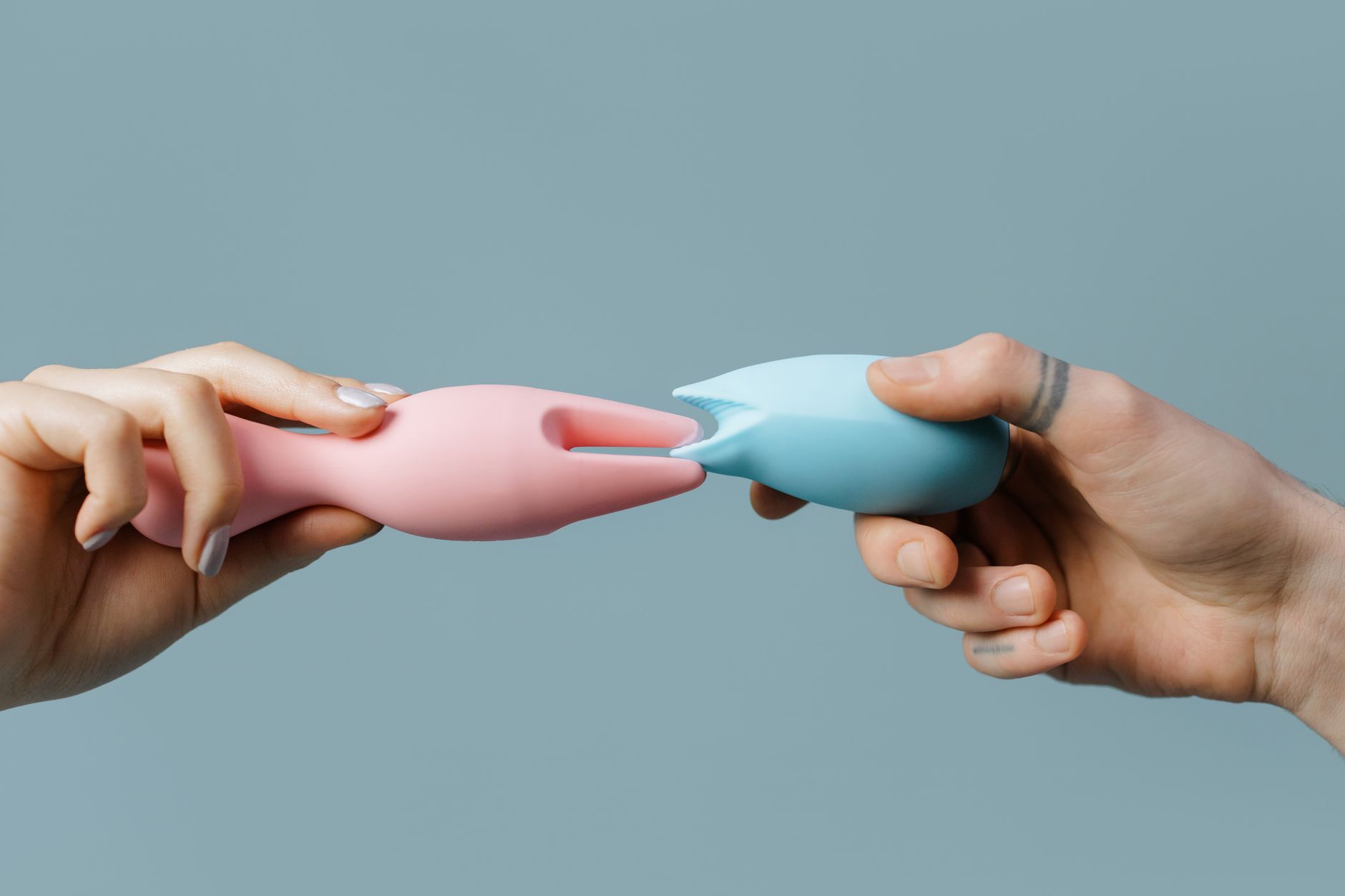
Photo by cottonbro studio on Pexels
Common worries, addressed
"What if they feel threatened?" Some people initially feel like toys mean they're not enough. The antidote is simple: tell them specifically what you love about sex with them. "I love how you touch me here" or "The way you move turns me on." Then frame the toy as enhancement, not replacement. "I want to experience different sensations. With you." The "with you" part matters.
"What if I don't come anyway?" Then you don't come. And that's fine. The point of introducing a lemon vibrator early isn't to guarantee orgasms. It's to normalize talking about pleasure and to give your body options. Some people come with vibrators; some don't. Some come sometimes. That variance is completely normal.
"What if they want to use it and I don't?" That's real and worth addressing early. Some people feel self-conscious being on the receiving end of a toy. If that's you, say so. "I love using this on you, but I feel weird having it used on me." Healthy partners respect that. If they don't, that's information too.
How it changes the relationship, usually for the better
Here's what I've seen happen in my practice with couples who introduce toys early. They have permission to talk about sex more openly. That conversation muscle gets stronger. Six months later, they're saying things like, "I want to try this position" or "Let's slow down," because they've already had the "toys" conversation. The hardest barrier is down.
They also tend to know each other's bodies better. Because exploration happened explicitly, not implicitly. You didn't spend three months guessing what they like. You asked. You showed.
And maybe most importantly, they reported higher satisfaction with intimacy overall. Not because the lemon vibrator is magic, but because it arrived as an invitation to deeper connection, not a band-aid on a problem.
The language that works (and what to avoid)
Do say: "I want to feel amazing with you." "I'm curious about trying this." "Help me explore." "I love that we can talk about this."
Don't say: "You're not getting me off." "I need this to come." "This is what I have to do." "Everyone uses toys."
The first set is about partnership and curiosity. The second set is about deficiency and obligation. Your new partner will hear the difference.
When to involve a lemon sucker or clitoral vibrator
If you're already established in the relationship and orgasm has been inconsistent, you have a few paths. The most direct: "I want to try a lemon clitoral vibrator to see if it helps me understand my body better. Want to be part of that?" Then follow the same steps. Let them watch. Guide them. Make it collaborative.
If they refuse entirely, that's worth a conversation about why. Sometimes it's genuine discomfort with toys. Sometimes it's deeper stuff about control or insecurity. A therapist can help untangle that if it matters to you.
FAQ
How do I bring up toys without making them feel inadequate?
Frame it as discovery, not diagnosis. "I want to explore new sensations with you" is about expansion. "You're not making me come" is about blame. The first opens doors. The second closes them. Also, emphasize what you love about sex with them specifically, separate from the toy conversation.
Is it weird to use a lemon vibrator with someone I just started dating?
Not anymore. Younger couples especially are much more open about this stuff. The conversation might feel weird for thirty seconds, but the relief after is usually huge. Most people want to know what their partner actually enjoys.
What if I've been dating someone for years and never mentioned toys?
It's not too late. The conversation gets slightly harder the longer you wait, but it's still possible. Try something like, "I've been thinking about ways to deepen our physical connection. I'd like to try something." Then show them what you're thinking. Sometimes action is easier than abstract discussion.
Do I have to use a lemon clitoral vibrator or can I use something else?
You can use anything that works for your body. That said, lemon vibrators from Buy Lemon Clit are designed specifically for clitoral stimulation and are quieter and more discreet than many alternatives, which can make the first time less intimidating for both of you.
What if they want to use it on themselves instead of me using it?
That's great. It means you get to watch, which is intimate. Let it happen. You can always swap roles later. Some couples find that having the person with the vulva guide the toy on their own body first, then letting their partner take over gradually, creates the easiest learning curve.
Should I buy the vibrator before or after we talk about it?
After. Have the conversation first. If they're skeptical, you can order it together and read reviews. If they're excited, you can pick one that feels right. Buying it beforehand can feel presumptuous and might trigger defensiveness. The conversation first, the toy second.
The real payoff
Introducing a lemon vibrator early in a relationship isn't about fixing broken sex or admitting failure. It's about building something better from the start. It's about saying, "My pleasure matters. Your participation matters. Us figuring this out together matters."
That conversation, awkward as it might feel for thirty seconds, is one of the most intimate ones you can have. And what comes after is usually pretty great.
If you're ready to have that conversation, start here. Then let yourself be surprised by what happens next.
Learn how to choose the right lemon vibrator style for your body to make the conversation even easier, or reach out if you have questions about your experience.
Honestly? Your new partner probably wants to know what makes you feel good. You're just giving them a map.