Let's start with consent
Here's the thing: pleasure after trauma is not automatic. It's not something that should happen on a timeline or at someone else's pace. It happens when you decide it happens, on your terms, with full permission from yourself.
This matters because trauma rewires how your nervous system processes sensation. Touch that once felt good can trigger a jolt of danger. Vulnerability, which is what pleasure requires, can feel unsafe. The body remembers what the mind wants to forget. And honestly, that's not a flaw in your healing. That's your nervous system doing exactly what it was designed to do: protecting you.
A lemon vibrator isn't a cure. But it can be a tool for reclaiming sensation in a way that feels controlled, predictable, and entirely yours.
How trauma changes sensation
When your nervous system has been through something overwhelming, it often gets stuck in one of two modes: hypervigilant (constantly scanning for threat) or numb (shut down to avoid feeling anything). Both are protective. Neither makes pleasure easy.
Trauma can also create what therapists call "dissociation" during intimate moments. Your body is present, but your mind has checked out. You're not really there. This is especially common if the trauma was sexual or involved loss of control.
A clitoral vibrator like the Lem works differently than partnered touch because it removes the unpredictability. You control the intensity. You choose when to start and stop. You're not waiting for someone else to notice if you're uncomfortable. There's no pressure to perform pleasure or prove you're "healed enough."
This sense of agency is not a small thing. It's foundational to rebuilding a relationship with your own body.
Starting slow with sensation
Most people reach for a vibrator and immediately dial it to high intensity. When you're rebuilding after trauma, this is exactly backward.
Start with the lowest setting. Put it on the outer labia, not directly on the clitoris. Feel the vibration without any expectation of arousal or orgasm. Your only job is to notice: what does this feel like? Is it pleasant or neutral? Does it bring you closer to your body or further away?
Spend several sessions just here. There's no race to orgasm. Some people find that the first time they use a lemon vibrator after trauma, they feel absolutely nothing, and that's okay. Numbness is part of healing sometimes. It will shift.
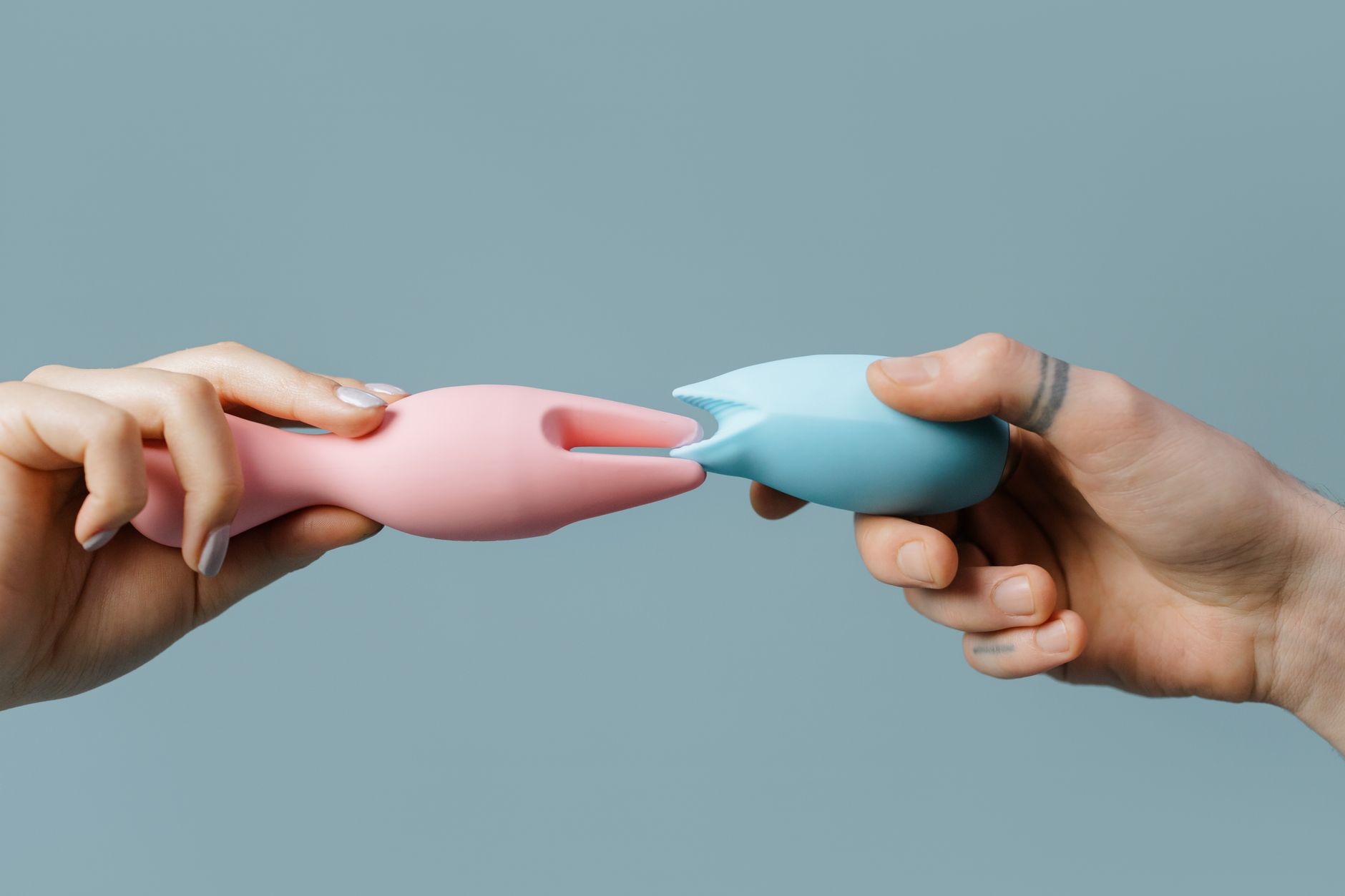
When you're ready to move closer to the clitoris, do it with intention. Some trauma survivors find that suction-based stimulation, like the sensation from a Lem, feels safer than direct vibration. The pressure is distributed. There's less intensity at a single point. This can make the experience feel grounded rather than overwhelming.
Building a ritual of consent with yourself
Here's what I tell clients: before you even touch the vibrator, check in with yourself. Not in a clinical way. More like, "How am I feeling right now? Is my body interested in this?" If the answer is no or unclear, that's a complete sentence. You don't need a reason.
If the answer is yes, create a small boundary around the experience. Tell yourself you can stop whenever you want. You can take a break. You can switch positions. You can decide halfway through that you're done. This sounds obvious, but after trauma, the ability to exercise control during intimacy is genuinely transformative.
Some people like to use the vibrator in a very specific place: a certain chair, at a certain time, with a specific playlist. This can actually help your nervous system relax because it knows what to expect. Predictability builds safety.
Others find it helpful to name what they're doing. "I'm exploring pleasure. I'm in control. I can stop anytime." Speaking this aloud, or even just thinking it clearly, helps your brain stay present instead of retreating into that protective dissociation.
Addressing arousal gaps and faking
One of the most common struggles after trauma is the inability to get aroused, even when your brain wants to. Your mind says yes. Your body says nothing.
This is not a problem with you. It's a sign that you might benefit from more time, more grounding, or possibly support from a trauma-informed therapist. A vibrator can help bridge this gap, but it's not meant to force arousal before you're ready.
Some people find that using a lemon clitoral vibrator while doing grounding exercises helps. Try focusing on your breath. Notice five things you can see. Feel your feet on the ground. These aren't distractions from pleasure. They're what allows your nervous system to relax enough for pleasure to show up at all.
One thing I'd gently push back on: trying to fake orgasm or fake arousal to "prove" you're healing. You're not. You're just adding another layer of disconnection on top of the one already there. Your healing is real whether or not your body cooperates right now.
When to bring a partner into the picture
If you have a partner, there will come a moment when you want to share this part of your healing with them. This isn't mandatory. Solo exploration might be exactly what you need, and that's completely valid.
If you do decide to involve a partner, start very small. Maybe they just sit nearby. Maybe they hold your hand. Maybe you use the vibrator while they're in the room but not touching you. You're building evidence for your nervous system that intimacy can be safe.
Be clear about what you need. "I need you to ask before you touch me" or "I need you to stay still" or "I need you to tell me what you're doing before you do it." Trauma survivors often need more communication, not less.
Some people find it helpful to have a signal that means "pause, I need a break." Not because something went wrong, but because checking in helps your nervous system know you're truly in charge.
Medication and sensation
If you're on an antidepressant or anti-anxiety medication as part of your trauma recovery, know that some of these medications can affect sensation or arousal. This doesn't mean you can't use a vibrator. It means you might need to adjust your expectations or your technique.
Lower settings, longer warm-up time, and more direct clitoral contact often help when medication is dulling sensation. Talk to your prescriber if arousal issues are affecting your quality of life. There are usually options.
When solo pleasure isn't enough
If you find yourself stuck, or if using a vibrator triggers panic or flashbacks, that's a sign you'd benefit from working with a trauma-informed sex therapist. These therapists exist specifically to help people like you rebuild pleasure in ways that honor what you've been through.
You don't have to do this alone. Pleasure after trauma is possible. It just might look different than you expected, and it deserves real support.
FAQ: Pleasure and Trauma Recovery
How long does it take to reclaim pleasure after trauma?
There's no timeline. Some people feel shifts in weeks. Others take months or years. What matters isn't the speed. It's the direction. Are you moving toward your body or away from it? Are you making choices from a place of intention or from a place of obligation? If the answer is intention, you're healing, even if it doesn't feel fast enough.
Can a vibrator trigger flashbacks?
Possibly, yes. This doesn't mean vibrators are bad for you. It means your nervous system needs more time or a different approach. Starting with the lowest setting, in the safest setting, with an exit plan, all help. And if you do have a flashback, that's information. You might need more support, or you might just need to adjust your technique.
Is it normal to feel nothing when using a vibrator after trauma?
Completely normal. Numbness is often a protective response. Your nervous system is saying, "I'm not safe to feel right now." Keep using the vibrator at low intensity without expecting anything. Sensation often comes back slowly, on its own timeline.
Should I tell my partner I'm using a vibrator for healing?
That's up to you. Some people find that transparency builds trust. Others prefer to keep this as private exploration. There's no right answer. What matters is that you're not hiding it out of shame. You're making a conscious choice about what you want to share.
What if the vibrator makes me feel more disconnected from my body?
Stop using it. Not forever, necessarily. But for now. Your body is communicating that this tool isn't serving your healing right now. That's valid. Try again in a few weeks or months. Or work with a therapist first to build more safety before reintroducing a vibrator.
Can I use a lemon vibrator if I have a diagnosed condition related to trauma?
Yes, with support. If you have PTSD, C-PTSD, or another trauma-related diagnosis, a trauma-informed therapist can help you use a vibrator in a way that supports your healing rather than triggering you. You deserve pleasure that feels safe.
The truth about reclaiming pleasure
Your body isn't broken. It's not punishing you. It's trying to keep you safe. And when you're ready, and when you have the right tools and support, pleasure becomes possible again. It might look different. It might feel different. But it's there, waiting for you.
Start where you are. Use what you have. And give yourself permission to take your time. Healing isn't a race. It's a return to yourself.