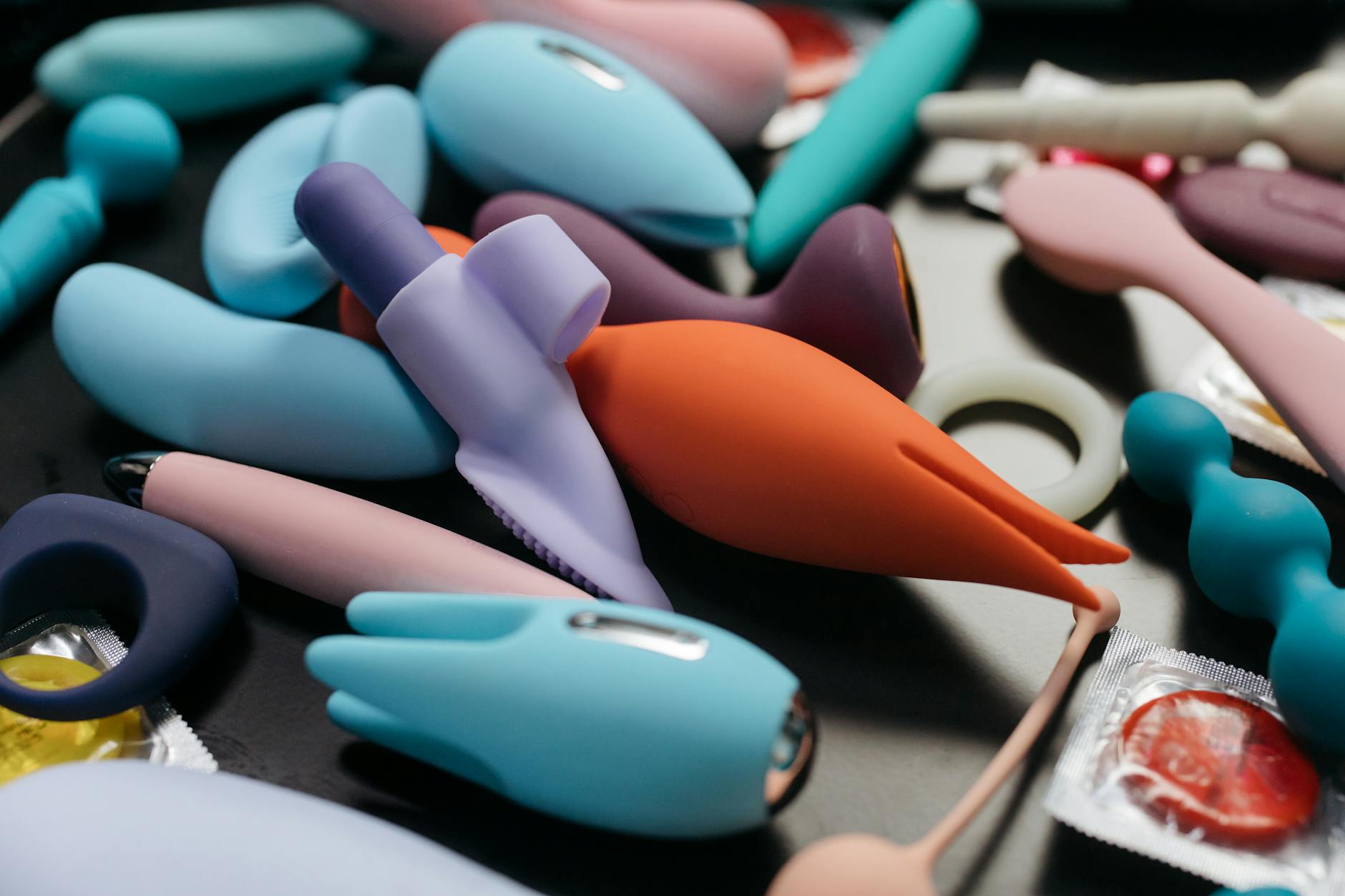
Let's talk about what breakups actually do to pleasure
Breakups disconnect you from your body. For years, maybe decades, pleasure was something you navigated with someone else. You learned their rhythm, made space for their response, calibrated your own satisfaction around partnership dynamics. Then suddenly, you're alone. And your body feels like it belongs to a person you're not sure you recognize anymore.
That's not weakness. That's the actual neurological fallout of intimate partnership. Your nervous system was wired to someone else's presence. Rebuilding solo pleasure isn't selfish. It's reclamation.
Why lemon vibrators work particularly well in this transition
Here's the thing about clitoral vibrators, specifically air-suction models like the Lem vibrator. They work on a completely different principle than traditional vibration. Instead of rapidly oscillating against tissue, they use gentle suction and pressure to stimulate the clitoral nerves. For someone rebuilding after a breakup, this matters because.
First, the sensation is different enough from partnered sex that it doesn't trigger the muscle memory of your ex. You're not comparing it to their touch. You're not reaching for patterns that no longer exist. The Lem vibrator creates a novel sensation entirely, which means your brain gets to experience pleasure as brand new information.
Second, suction-based lemon sexual toys require less friction and produce less numbing over repeated sessions. When you're learning to be with your own body again, sensitivity matters. Conventional vibrators can dull sensation if you're using them multiple times a week. Lemon adult toys prevent that progression, which means you stay connected to what's happening instead of chasing intensity you've already lost.
Third, and honestly most important, air-suction vibrators feel less "clinical" to many people. Traditional vibrators buzz. They sound like machines. The Lem vibrator is quieter, more intimate-feeling, and somehow gentler. When you're grieving the end of physical contact with a real person, that matters.
Starting again after months (or years) without solo pleasure
A lot of people in post-breakup recovery tell me they haven't touched themselves in months. Partly because the grief is still fresh. Partly because pleasure feels complicated without someone else present. Partly because they've lost the permission.
Here's where I gently push back. You don't need permission from your ex or anyone else to know what feels good. You're not cheating on a relationship that's over. You're not betraying anyone. You're meeting a basic human need that your body still has.
Start small. Seriously. Don't pressure yourself into full pleasure sessions with a full-featured lemon clitoral vibrator on day one. Instead, spend five minutes just exploring sensation. Use the Lem vibrator on the lowest pattern. See what happens when you're not performing for anyone. When there's zero pressure to come or look a certain way or be responsive to someone else's needs.
Many people find that the first few sessions are more about reconnection than orgasm. Your body remembering that it can feel good without an audience. That's the actual work. The orgasm comes later.
Navigating guilt and other emotions that show up
You might feel weird. Guilty. Like you're being unfaithful to someone you're no longer with. Like you're wasting energy on pleasure when you should be "healing." Like you're admitting the relationship is really over by building a solo life that includes solo sex.
All of that is normal. And none of it is true.
Pleasure after breakup isn't selfish or frivolous. It's evidence that you're still alive. It's your nervous system slowly remembering that good feelings exist independent of whether someone else is present. It's you saying: I matter. My body matters. What feels good to me matters.
If guilt comes up, sit with it for a minute. Notice it. Then ask yourself: am I actually betraying someone, or am I grieving? Those are different things. Grief takes time. Pleasure and grief can exist simultaneously. A lemon vibrator won't speed up either one. But it will remind your body that sensation and joy are still possible.
How to actually use a clitoral vibrator when you're rebuilding
Physically, the mechanics are straightforward. But emotionally and psychologically, this is about intention.
Set up a space where you feel safe. Not necessarily romantic. Safe. Quiet enough that you can hear yourself think. Dim enough that you don't feel exposed. Temperature matters more than you'd think. Being too cold makes it hard to relax. Use a robe or blanket.
Start with low stimulation. The Lem vibrator has multiple patterns. Begin at level 1 or 2. Your body has been in protection mode. It needs time to remember that pleasure is coming. Build slowly.
Touch everywhere first. Your neck, your chest, your inner thighs. The lemon clitoral vibrator is designed for direct clitoral stimulation, but your whole body is still part of the equation. Let arousal build across your whole nervous system, not just one spot.
When you do use the vibrator directly, angle it slightly. Let it make contact without pressing hard. Many people find that the best sensation comes from indirect stimulation. A little to the side of the clitoris rather than dead-center. Experiment. There's no wrong way.
Set a time limit initially. Not a "you must come in ten minutes" limit. More like "I'm going to spend fifteen minutes with this and then I'm done." This takes the pressure off. Breakup brains are already doing a lot of monitoring and achieving. Solo pleasure should be the one place where you're not trying to hit a target.
What changes emotionally as you rebuild
After a few weeks of regular use, something shifts. You stop thinking about your ex during pleasure moments. Your body starts to feel like your own again instead of like a landscape you shared with someone else. Orgasms taste different. They feel smaller, more personal, less performative.
You might also notice that you cry. Or feel angry. Or feel nothing at all and wonder why. All of that is your nervous system releasing stored information. Grief and pleasure are stored in the same places in your body. Sometimes they come out together.
This is why a tool like the Lem vibrator, rather than, say, partnered sex, actually helps more during this phase. You control the entire experience. The pace, the intensity, when it stops. For someone whose sense of control was just shattered by a breakup, that autonomy matters more than you'd expect.
When to escalate vs. when to stay with what's working
You don't have to get fancy. The simplest lemon vibrator, used with intention, is often exactly what you need. But if you're curious about exploring different intensities or patterns, there's no rule against it. The Lem vibrator has multiple settings specifically because different desires change week to week.
If you're six months post-breakup and ready to play with more intensity, that's great. If you're two years out and still prefer the gentlest setting because it feels most intimate to you, that's equally valid.
The goal here isn't to become some kind of pleasure expert or to rack up the most intense orgasms. The goal is to befriend your own body again. To know that good feelings are possible without someone else present. To rebuild the confidence that comes from knowing yourself well enough to give yourself what you need.
That's what a lemon clitoral vibrator can do. It's not magic. It's not a replacement for grief work or therapy or time. But it's a concrete way of saying: my pleasure matters. My body matters. I matter, alone.
FAQ: Solo pleasure and post-breakup recovery
How long after a breakup should I wait before using a vibrator?
There's no standard timeline. Some people are ready after weeks. Others need months. Listen to your body rather than a calendar. If you feel an impulse toward pleasure, that's actually your nervous system saying it's ready to move out of pure survival mode. There's nothing wrong with following that signal. A lemon vibrator is gentler than many rebound decisions you might make instead.
Can using a clitoral vibrator make it harder to orgasm with a future partner?
No. This is one of the persistent myths, and it simply doesn't hold up. Using a lemon sexual toy solo doesn't damage your ability to respond to partnered touch. In fact, the opposite is often true. People who know what feels good to their own bodies tend to communicate that more clearly to partners, which actually improves partnered pleasure for everyone involved.
What if I feel ashamed using a vibrator after a breakup?
Shame often shows up when we're doing something that goes against what we were taught about ourselves. If you were in a relationship where solo pleasure was implicitly discouraged, or where sex was framed as only for the partnership, that conditioning doesn't disappear the day the relationship ends. This is where a lemon vibrator becomes an act of reclamation. You're literally choosing your own pleasure over old narratives. That's powerful, and yes, it might feel uncomfortable at first. That discomfort is grief, not wrongness.
Is it weird that I want to use a vibrator but don't want to have sex with actual people yet?
Not weird at all. Solo pleasure and partnered intimacy are different nervous system activities. You might be ready for one and not the other. Using a lemon clitoral vibrator is a way of reconnecting with your body on your terms, in your timeline. It has nothing to do with readiness for dating. They're completely separate conversations.
How do I know if I'm using the lemon vibrator too much?
If you're using it daily and finding that you're avoiding other emotions or activities, that might be worth examining. But that's true of any coping mechanism. If you're using it a few times a week and it's bringing you pleasure and reconnection without displacing other parts of your life, you're fine. Listen for the difference between comfort and avoidance.
Can a lemon sexual toy help with depression after a breakup?
Pleasure is neurologically linked to dopamine production, so yes, in a limited way. But vibrators aren't therapy. If you're experiencing clinical depression, that needs professional support. What a lemon adult toy can do is offer a small, somatic reminder that your body is still capable of feeling good. That matters, but it's not a substitute for mental health care. Getting both is the move.
Breakups are a kind of death. Your old life with that person is gone. Rebuilding pleasure with yourself afterward is part of the resurrection. It's not the most important part. But it's a necessary one. Your body deserves to remember that it can feel good. A lemon vibrator is just the tool that makes that remembering possible. The real work is you, showing up for yourself, again and again, until pleasure feels like something you own rather than something you lost.
If you're navigating this transition and want support beyond what a vibrator can offer, reach out to our team. We're here to answer questions about products, but also to remind you that your healing matters.