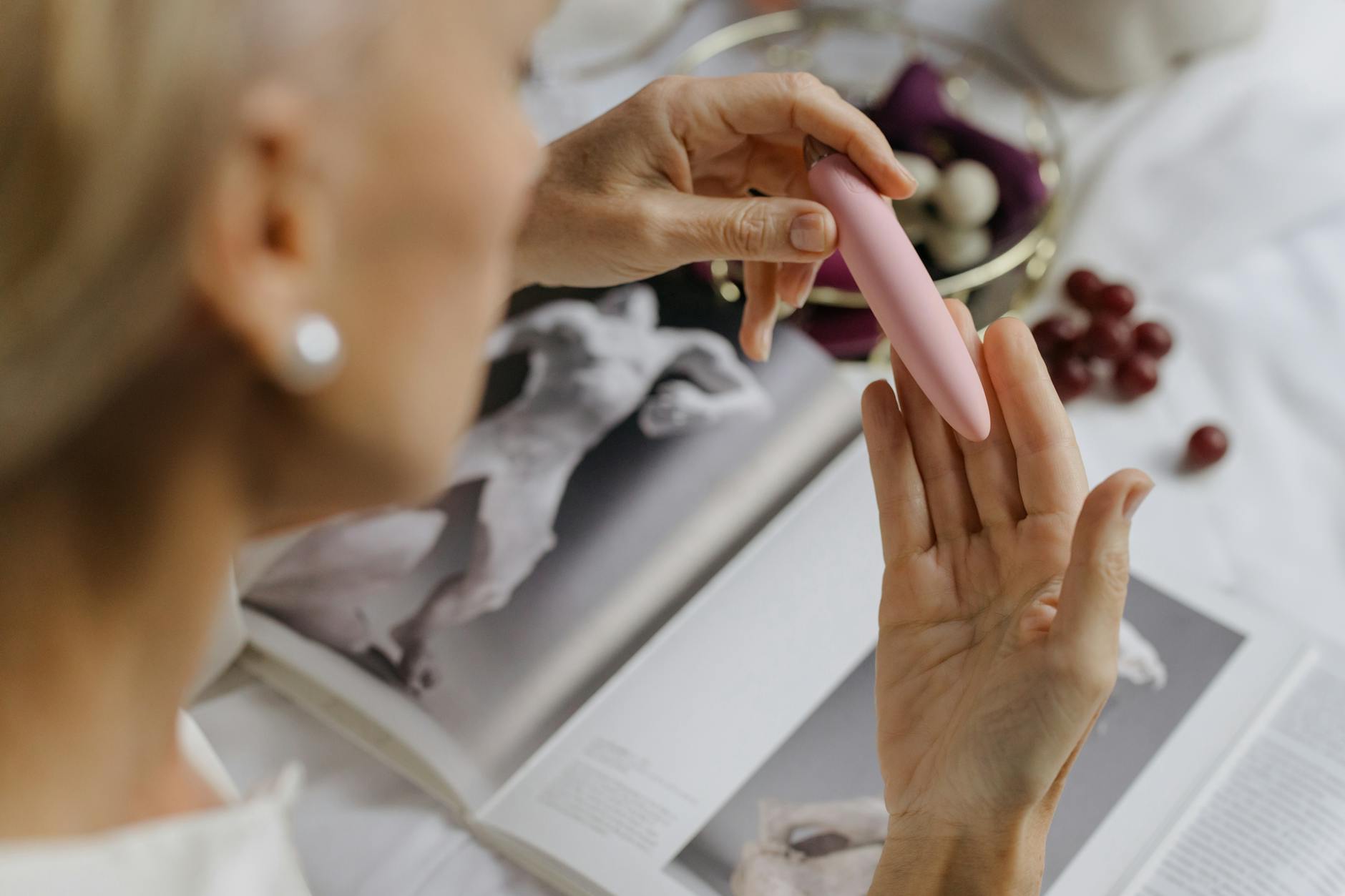
Let's start with the honest part
A new diagnosis rewires more than your health. It rewires how you feel in your own body, how you think about sex, and whether you believe pleasure is still for you. Most people don't talk about this part, which means most people suffer through it alone, assuming everyone else figured out how to keep their intimate life intact after their doctor gave them news that changed everything.
Here's the truth: pleasure doesn't disappear after a diagnosis. But it does need renegotiation. And that renegotiation is entirely possible, sometimes even richer than before, once you understand what's actually happening physically and emotionally.
The diagnosis effect on intimacy
When you get a new diagnosis, your nervous system responds like it just received a threat notification. Your brain gets flooded with cortisol and adrenaline. You're running scenarios, calculating side effects, worrying about what this means for your body, your partner, your future. That state of high alert is fundamentally incompatible with arousal.
And then there's the physical piece. Depending on the diagnosis, you might be dealing with inflammation, medication side effects, fatigue, pain, or reduced sensation. Your body feels like it belongs to the doctor now, not to you. That disconnect is real and it's worth naming.
But here's what doesn't change: your capacity for pleasure hasn't been deleted. It's been temporarily redirected by shock and fear. The nervous system that's stuck in threat mode just needs permission and a clear pathway back to sensation.
Why air-suction stimulation works better right now
When you're navigating a new diagnosis, your body often needs gentler input than traditional vibration provides. Lemon vibrators use air-suction technology, which works differently than standard clitoral vibrators. Instead of mechanical vibration, suction stimulates the nerve endings around the clitoris without the same direct friction.
This matters for three reasons:
First, it's less demand on your system. If you're dealing with inflammation, exhaustion, or pain sensitivity, suction spreads stimulation across a wider area and doesn't require your tissues to absorb direct mechanical pressure. You get intense sensation without intensity.
Second, it engages a different neural pathway. Suction activates pressure receptors rather than vibration receptors, which means your brain is receiving a novel input. That novelty can actually help interrupt the diagnosis anxiety loop. Your attention shifts from "my body is broken" to "wait, that feels interesting."
Third, it works with medication side effects. Many common meds used after diagnosis, including some antidepressants and pain medications, can numb sensation or delay arousal. Suction's broader stimulation often cuts through that numbness more effectively than vibration alone.
The mindset shift that makes it work
You have to separate two conversations that feel tangled right now: "my body is going through something medical" and "my body is still capable of pleasure." Right now, those feel like the same conversation. They're not.
Your doctor owns conversation one. Your nervous system and your partner own conversation two. And you deserve both.
Before you even pick up a lemon clitoral vibrator, tell yourself this: pleasure after a diagnosis isn't about proving you're still normal. It's about proving to yourself that you're still you. Your sexuality isn't a symptom to manage. It's a capacity to reclaim.
Building back arousal after a diagnosis shock
Start solo. Seriously. Even if you're partnered, your body needs to remember how to respond on its own terms before you add the complexity of someone else's presence.
Set a time when you're not fatigued, not in pain, and not thinking about doctor's appointments. For some people that's morning. For others it's that weird 4 p.m. window on a weekend. For some it's not about the time at all but the context, a locked door or a partner who knows not to interrupt.
Week one and two: Touch your body without the lemon vibrator. Not goal-oriented, not trying to arrive at an orgasm. Just noticing sensation. How does your collarbone feel when you touch it. Your inner thighs. Your breasts if you have them. Your neck. The idea is to wake up your sensory map before you add stimulation.
Week three: Introduce the lemon vibrator on the lowest setting, but don't go straight to your clitoris. Use it on your thighs, your labia, the skin around your vulva. Let your body anticipate what's coming. Spend 5-10 minutes here. Boredom is fine. So is nothing happening. You're resetting the baseline.
Week four and beyond: Move the suction to your clitoris, starting at the lowest intensity. Use short 30-60 second intervals at first. Stop. Rest. Notice what that felt like. Go again. You're not chasing an orgasm. You're teaching your body that sensation is safe again.
Communicating with a partner after diagnosis
If you're partnered, your partner is probably scared too. They're worried about hurting you, about whether sex is still okay, about what this means for you both. That fear often comes out as distance or avoidance.
You don't need to have a formal conversation about your lemon vibrator right away. But you do need to tell them you're rebuilding intimacy on your own timeline and you'll let them know when you're ready to include them. That permission softens their fear.
When you do invite them back in, they don't need to do anything except be present. They can watch. They can hold you. They can use the vibrator on you if that feels right. The point is that you're building pleasure together again, but not in a way that requires them to perform or manage your body.
Managing fatigue and pain around pleasure
Many diagnoses come with fatigue. Many come with pain. Pleasure when you're exhausted or hurting feels impossible, but it's not. It just requires honest negotiation.
If fatigue is the barrier, try super short sessions. Three minutes with the lemon vibrator, done. Not every day. Once or twice a week. The goal isn't an orgasm. The goal is the signal to your nervous system that sensation still lives in your body.
If pain is the barrier, start away from the painful area. If pelvic pain is the issue, focus on your breasts, your neck, your stomach, your inner arms. Use the vibrator there. Let arousal build in your body from the top down instead of focusing on the area that's hurting.
And sometimes the answer is that today's not the day. That's okay. Your body gets a vote.
The pieces that shift overtime
About six weeks in, you might notice your partner asking about your experience instead of you having to initiate the conversation. You might notice your nervous system staying calmer in other areas of life, not just during intimate moments. You might notice that orgasms feel different, sometimes bigger, sometimes smaller, but definitely present.
You might also notice that you stop asking "is my body still functional" and start asking "what do I actually want right now." That's the real shift. That's when you know you've moved from surviving a diagnosis to integrating it.
Lemon vibrators, because they offer a different kind of stimulation than traditional vibrators, often feel less clinical and more like they belong to pleasure rather than medical management. They're a tool, but they're a tool that feels like it's on your side.
When to reach out for help
If after eight weeks of solo exploration you're still feeling completely numb, or if your partner is struggling with their own fear about your diagnosis affecting your intimacy, that's the moment to reach out. A therapist who specializes in health crises and couples counseling can help you both grieve what's changed while building toward what's possible.
Your diagnosis is real. Your pleasure is also real. They're not in competition.
FAQ
Can I use a lemon vibrator if I'm on pain medication?
Yes. Pain meds can reduce sensation, but suction stimulation often cuts through that numbness more effectively than traditional vibration. Start at the lowest setting and give yourself permission to take it slow. If you're concerned about a specific medication, ask your doctor whether it's likely to affect sensation. Many won't.
How long does it take to feel normal again after a diagnosis?
Depends on the diagnosis and your personality. Some people regain interest in intimacy within weeks. Others take months. Neither timeline is wrong. What matters is that you're moving forward, not staying stuck. If you're seeing zero progress after three months of consistent effort, that's when professional support helps.
Should I tell my partner I'm using a lemon vibrator?
Not mandatory, but transparency usually helps. Partners often assume the worst about these things, imagining you're replacing them or unhappy. Knowing you're using it as part of your own healing process actually brings most partners closer. It shows you care about reconnecting.
Can I use a lemon clitoral vibrator if I'm exhausted from my diagnosis?
Absolutely. Use it for three minutes instead of thirty. Use it once a week instead of daily. Pleasure doesn't require endurance. Short sessions tell your nervous system that sensation is available without asking your body for more than it can give.
What if my diagnosis affected blood flow or sensation?
This is where suction becomes especially useful. Because it's activating a different sensory pathway than vibration, many people with reduced sensation find lemon vibrators more effective than standard vibrators. And many lemon vibrators have adjustable intensities, so you can dial it up as your body adapts.
How do I know if I'm pushing too hard versus not trying hard enough?
If you're forcing yourself, you're pushing too hard. If you're avoiding it entirely because you're scared, you might need to try once more. The sweet spot feels like mild curiosity, not motivation or dread. You're wondering what sensation feels like, not proving anything to anyone.
You deserve to feel good
Your diagnosis is real. Your body has changed. And your pleasure is still available to you, waiting for you to be ready to reclaim it. A lemon vibrator isn't a magic solution. But it's a gentle, effective tool for teaching your nervous system that sensation and safety can coexist, even now. Especially now.
If you're ready to explore how reconnecting with your body might look, or if you want to talk through what your diagnosis means for your intimacy, reach out. We're here to help.
Ready to explore? Contact us to talk through what rebuilding pleasure looks like for you. Or check out our care guide for detailed information on using and maintaining your lemon vibrator.