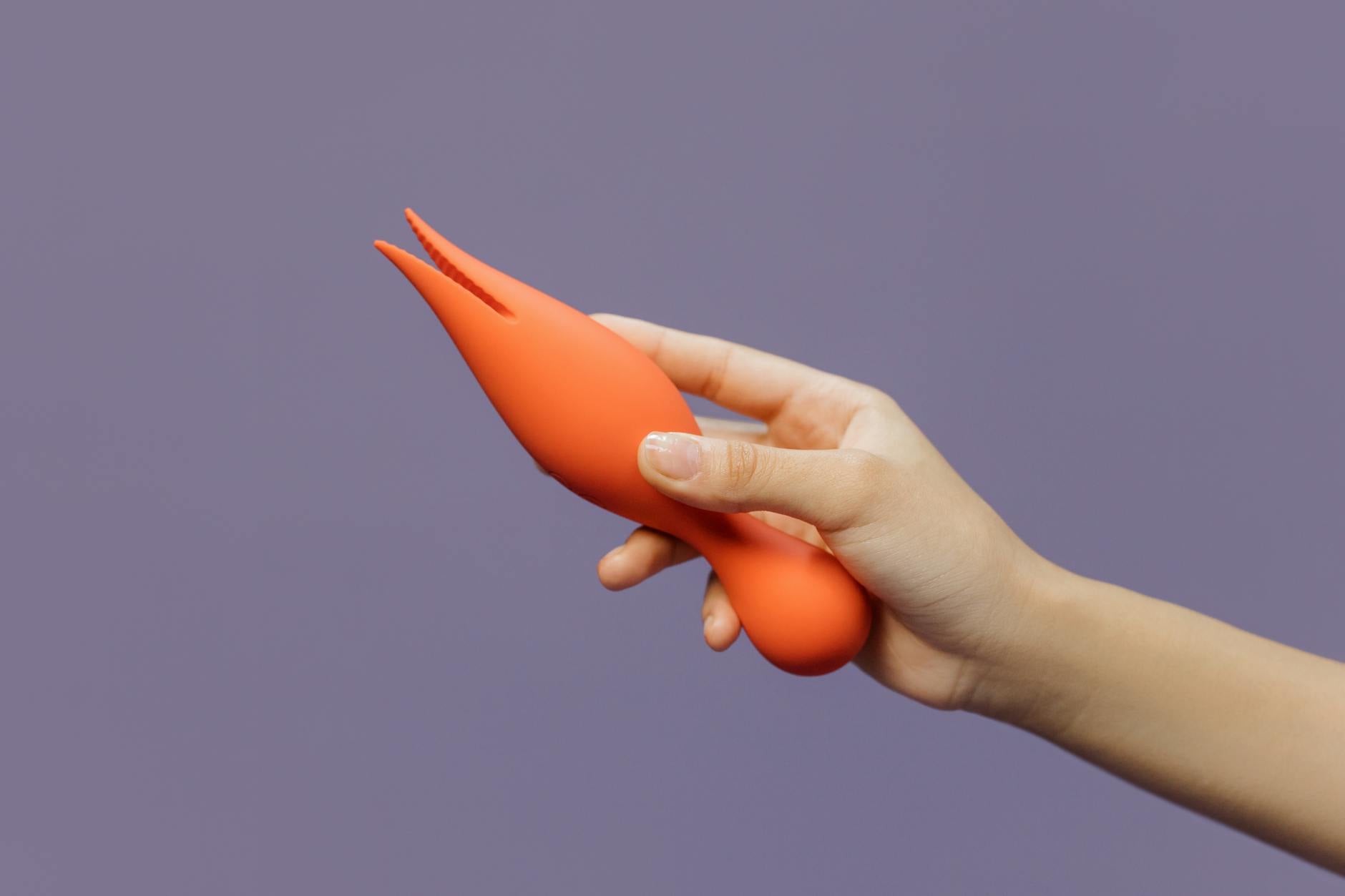
Let's talk about the thing no one mentions
You started antidepressants or blood pressure medication or hormonal birth control, and suddenly your body stopped cooperating. Arousal takes longer. Orgasm feels impossible. Sensation feels muted, like you're touching yourself through wool. This is not your imagination. This is a well-documented side effect that affects roughly 40-60% of people taking SSRIs, and it happens with tons of other medications too.
Here's what usually happens: you mention it to your doctor, they shrug and say "try a different medication" or "just use more lube," and then you're stuck wondering if pleasure just isn't part of your life anymore. That's wrong. Lemon clitoral vibrators work differently than traditional vibration, and that difference matters enormously when medication is involved.
Why medication affects arousal in the first place
Antidepressants work by changing serotonin levels in your brain. Serotonin regulates mood, yes, but it also regulates sexual response. Higher serotonin can mean lower dopamine in the pathways that trigger desire and orgasm. It's a chemical trade-off: you feel better emotionally, but your body's pleasure response gets quieter.
Blood pressure medications, hormonal birth control, and even some antihistamines cause similar dampening effects, but through different mechanisms. They narrow blood vessels, alter hormone levels, or interfere with the neural signals that trigger arousal. The result is the same: sensation becomes harder to access.
The key thing to understand is that this isn't a willpower problem or an attraction problem. Your nervous system is literally receiving fewer signals. A traditional vibrator often makes this worse because it relies on direct vibration frequency to stimulate nerve endings. If your nerves are already muted, regular vibration just feels buzzy and numb.
How lemon vibrators change the equation
Lemon clitoral vibrators use suction and pulsation instead of straight vibration. Instead of shaking at a fixed frequency, they create rhythmic waves of pressure that expand and release against the clitoris. This is important because suction-based stimulation engages the tissue differently.
When your nervous system is dampened by medication, suction bypasses that numbing in two ways. First, it stimulates a broader area of nerve endings at once rather than one concentrated zone. Second, the rhythmic pressure-release pattern activates deeper sensory receptors that vibration often skips over. People on SSRIs and other medications consistently report that suction feels more present, more intense, and more achievable than traditional vibration.
The Lem by Buy Lemon Clit, for example, uses gentle suction at different intensities. When you're medicated and sensation is muted, you're not fighting against numbness with the same old buzzing tool. You're using a completely different stimulus pattern.
Three practical adjustments for medicated bodies
Start with the middle intensities, not the lowest.
This seems backward, but it works. With medication dulling sensation, intensity level 1 on a lemon sucker vibrator often feels like nothing at all. Jump to level 3 or 4 and you'll actually feel something. Build from there. You're not going too strong; you're matching the stimulus to your current sensory capacity.
Give yourself longer warm-up time.
Medication extends the arousal curve. What used to take five minutes now takes 20. That's not a failure. Budget the extra time, remove the pressure to "get there," and let your body wake up on its own timeline. Foreplay, mental arousal, or just lying with the toy against your skin without turning it on first helps blood flow find its way back to the area.
Use lube even if you think you don't need it.
Many medications reduce natural lubrication, but even if that's not your specific issue, lube helps the suction create a better seal. Water-based lube works with silicone toys. A good seal means better sensation. Better sensation means your medicated nervous system can actually register what's happening.
When different medications need different strategies
SSRIs and SNRIs (sertraline, paroxetine, venlafaxine):
These are the biggest arousal offenders. The numbness tends to be global. Start with a lemon clitoral vibrator at moderate intensity and don't expect instant results. Many people find that their body's capacity returns after 2-3 weeks of consistent practice, as your nervous system starts rewiring around the new stimulus pattern.
Blood pressure meds (beta-blockers especially):
Beta-blockers reduce blood flow everywhere, including to the genitals. You may find that warm-up takes longer and arousal is harder to trigger. A suction toy helps because it creates localized blood pooling, which makes up for what the medication is reducing. Spend extra time on foreplay or external stimulation before going internal.
Hormonal birth control:
Hormonal suppression of testosterone is the culprit here, not central nervous system interference. You're not numb; you just have less desire. A lemon vibrator helps by providing the stimulus that might otherwise feel insufficient. The rhythmic pattern often feels more satisfying than vibration when desire is lower.
Antihistamines (especially first-generation, like diphenhydramine):
These dry you out everywhere and also dampen arousal centrally. Suction vibrators work better than buzz vibrators in this context because they don't require as much natural lubrication to feel effective. Add external lubrication and you're back in the game.
The conversation with your doctor (and yourself)
Honestly, many doctors don't have a great toolkit for this. If your medication is otherwise working and just affecting arousal, you have real options that don't require switching everything around.
First, ask your doctor if there's a medication in the same class that's less likely to cause sexual side effects. Some SSRIs (bupropion, for example) have lower sexual side effect rates. If switching isn't possible or hasn't worked, ask about adding an augmentation. Some doctors prescribe a low dose of a different medication specifically to offset sexual side effects, and it often works.
Second, give yourself permission to accept the trade-off. If your mental health is stable and your quality of life is better on medication, that matters more than orgasm. And lemon clitoral vibrators aren't a hack to "fix" yourself. They're a tool to meet your body where it actually is, not where you wish it were.
What to expect as your body adapts
The first week using a lemon vibrator while medicated might feel underwhelming. You might wonder if it's worth it. Give it two weeks before you decide. Your nervous system needs time to recognize this new stimulus pattern as pleasurable. That's not failure; it's adaptation.
Many people find that after consistent use, sensation starts returning even outside of toy use. Your nervous system is getting re-educated about pleasure. Some report that orgasms become stronger, not weaker, as their body learns to recognize and respond to the lemon's unique sensation.
The bottom line
Medication affecting arousal is a real side effect of treating a real condition. You don't have to choose between mental health and pleasure. Lemon clitoral vibrators work with your medicated nervous system, not against it. Suction-based stimulation bypasses the numbness that traditional vibration can't touch. Give your body time, adjust intensity to match your sensation capacity, and be patient with yourself.
If you want to explore this further, our guide to choosing a clitoral vibrator walks through the full range. And if you're dealing with arousal challenges from multiple angles, our article on using a lemon vibrator for clitoral stimulation when your libido is low covers broader desire issues.
FAQ: Medication and Lemon Clitoral Vibrators
Can a lemon vibrator completely reverse medication-related numbness?
Not completely, but it can help dramatically. A lemon sucker vibrator engages your nervous system differently than traditional vibration, so even while medicated, many people experience stronger sensation and more reliable orgasms. The exact recovery depends on the specific medication, dosage, and how long you've been taking it. SSRIs cause more persistent numbness than, say, hormonal birth control. Talk to your doctor if sensation doesn't improve after three weeks of consistent use.
Should I stop taking my medication to fix sexual side effects?
Absolutely not. Mental health comes first. If your medication is working for anxiety, depression, or blood pressure control, stopping it to regain sensation will likely make your overall quality of life worse, not better. Instead, explore tool options like lemon clitoral vibrators, talk to your doctor about augmentation, or ask about trying a different medication in the same class with fewer sexual side effects.
Do lemon vibrators work on every antidepressant?
They work on most, but the effect varies. SSRIs tend to create the most numbness, and that's where suction vibrators shine. Bupropion causes fewer sexual side effects to begin with, so the boost from a lemon vibrator might be less dramatic. Try one consistently for two to three weeks before deciding it's not working. Your nervous system needs time to adjust to the new stimulus pattern.
How long before I notice a difference with a lemon vibrator?
Some people feel the difference immediately because suction stimulation just feels more present than buzz vibration. Others need a week or two as their nervous system learns to recognize and respond to the pattern. Don't measure success by orgasm alone; also notice if sensation feels more or less numb, if arousal is easier to trigger, or if the experience feels more alive in your body.
Can I use a lemon vibrator with other sexual wellness tools?
Yes. Lube, foreplay, and mental arousal all help. Some people find that combining a lemon vibrator with a partner's touch, dirty talk, or even a fantasy they really connect with helps arousal build faster. Medication isn't an excuse to skip the good stuff; it's a reason to lean into it harder.
What if a lemon vibrator still doesn't help?
You might need medication adjustment. Talk to your doctor about (1) switching to a different SSRI or a medication class less likely to affect arousal, (2) adding an augmentation like buspirone or bupropion, or (3) adjusting your dose if possible. Sometimes a small change helps dramatically. If medication side effects are really severe, your mental health provider should know. Pleasure and arousal are part of quality of life, and your doctor should take that seriously.
Sources and Reading
If you want to go deeper, these resources back up what I'm sharing here. The science on medication-related sexual dysfunction is solid, and so is the emerging research on suction-based versus traditional vibration.
McCullough, A. R. (2004). "Sexual dysfunction associated with depression." Current Psychiatry Reports, 6(6), 423-432.
Segraves, R. T., & Segraves, A. B. (2003). "Antidepressant-induced sexual dysfunction in men and women." Journal of Clinical Psychiatry, 64(Suppl 10), 33-37.
Krajewski, C., et al. (2010). "An evidence-based review of the management of medication-induced sexual dysfunction." Psychiatric Services, 61(5), 496-504.