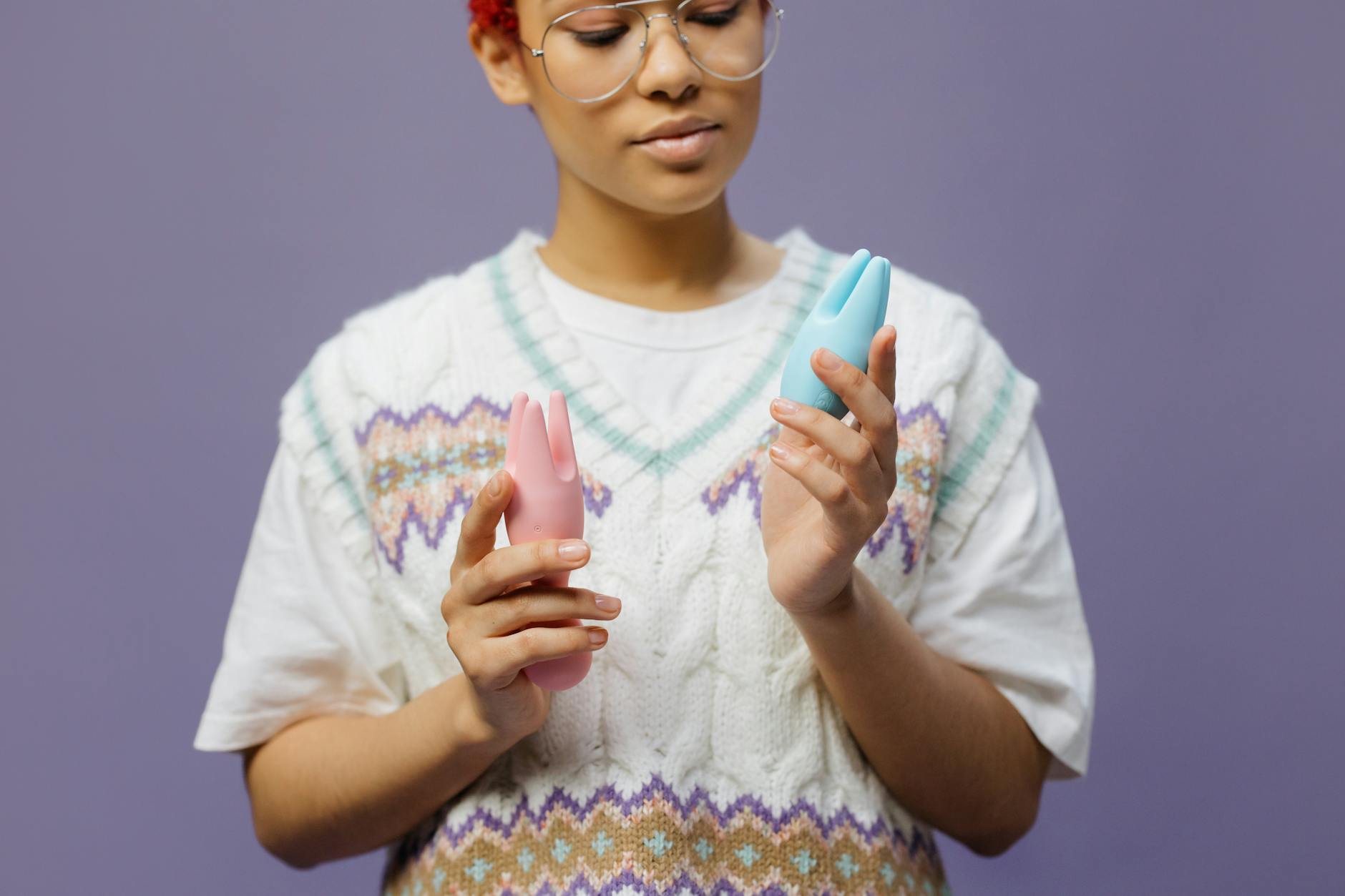
How to Use a Lemon Vibrator With Older Partners in Age-Gap Relationships
Age-gap couples face unique pleasure challenges. Here's how lemon clitoral vibrators bridge generational differences and rebuild confidence across the divide.
Age-gap relationships are complicated. Not because the age difference itself is complicated, but because bodies age at different rates, and pleasure changes differently for each person. When there's a significant gap between partners, the assumption is often that the older partner is the one with challenges. That's not quite right.
There's often a mismatch. One partner is navigating hormonal shifts, decreased stamina, or medication side effects that killed libido. The other is in their peak physical years and wants more frequency, more intensity, or just more time. Neither is wrong. They're just out of sync. A lemon clitoral vibrator, used thoughtfully, doesn't fix that mismatch. But it does create a bridge.
Here's what I see clinically. The younger partner often feels rejected when the older partner needs more recovery time, needs lube, or needs a different kind of stimulation than they used to give. The older partner feels pressure to perform like they did ten or twenty years ago. Shame builds quietly. Neither person mentions it.
Meanwhile, their bodies have legitimate, non-negotiable changes. If your partner is over 50, testosterone has dropped by about 1% per year since age 30. That's not a small thing. Erections take longer to arrive and are less rigid. Recovery time extends. Lubrication changes, whether we're talking about penile or vulvular tissue. Sensation can dull in the genitals while becoming hypersensitive elsewhere.
The younger partner might be experiencing their own shifts. Hormonal birth control can tank desire. Stress, kids, career pressure. Physical changes from aging too. The assumption that the younger partner has infinite stamina is as false as the assumption that the older one is over it entirely.
A lemon clitoral vibrator like the Lem works differently than traditional vibration. Instead of buzzing against tissue, it uses gentle suction stimulation to create sensation without requiring the same physical stamina from either partner. This matters in age-gap couples for three specific reasons.
First, it removes the performance pressure. When one partner is worried about keeping up or lasting long enough, pleasure shuts down. A lemon vibrator lets whoever needs stimulation focus on their own sensation without waiting for their partner's body to cooperate. That's radically freeing.
Second, it works beautifully when one partner has reduced sensation. If the older partner has dulled clitoral sensitivity from years of stimulation, hormonal changes, or medication, suction stimulation often cuts through that numbness better than fingers or traditional vibrators. It's not aggressive. It's just more effective.
Third, it creates a shared ritual instead of a performance. Using a lemon vibrator together transforms sex from "we need to sync our bodies" into "we're creating pleasure together." That reframe alone changes everything about how age-gap couples experience their bodies together.
Before you bring a lemon sexual toy into bed, you need one conversation. Not a sexy, playful one. A real one.
Sit down, not in bed, and ask your partner directly: "What's changed for you physically over the years? What feels different now than it did five years ago?" Let them actually answer. Don't solve it. Don't reassure them. Just listen.
Then share yours. Maybe you're the older partner and you're embarrassed that erections are less predictable. Maybe you're the younger partner and you've secretly worried your older partner finds you less attractive because they want sex less often. Say the thing you've been not saying.
Then: "I want us to explore ways that feel good for both our bodies right now. Not like we used to, but like we are now. Would you be open to that?"
If they say yes, then you can talk about tools. If they say no or they freeze, that's important information that needs a different conversation first. Maybe with a sex therapist. You can't skip that part.
This is delicate. Your older partner might interpret a lemon vibrator as "you're not enough anymore." Your younger partner might feel like you're admitting you don't find them attractive. Neither is true, but the interpretation happens anyway.
Frame it this way: "I read about this tool that's designed to feel really different than anything else. I'm curious if you'd want to explore it together, not because anything is wrong, but because it's supposed to feel amazing and I want that for us."
Then actually use it together the first time. Not as a substitute for partnered touch. Alongside it. One partner uses the lemon vibrator on the other while also kissing them, touching them elsewhere, talking to them. It's not a replacement for you. It's an addition to what you're already doing.
Start with lower settings. The Lem and similar lemon clitoral vibrators have intensity levels for a reason. Older bodies sometimes have more sensitive tissue. Younger bodies sometimes have more sensation-seeking. Find the sweet spot together.
Age gaps often mean circadian rhythm gaps too. The older partner might want sex in the morning. The younger partner wants it at night. One needs 20 minutes of warm-up. The other needs five. These aren't problems. They're just details.
A lemon vibrator lets you solve this without resentment. Maybe you spend 15 minutes together, and then one of you uses the vibrator while the other is present but not performing. That's not less intimate. It's differently intimate. It's honest.
Or maybe you take turns. One night is about their pleasure, with whatever tools and timeline they need. Next time is about yours. That's not transactional. That's actually what care looks like when bodies are different.
If your older partner takes medications that affect desire or function, that's a real thing to navigate. Some medications that treat high blood pressure, depression, or anxiety can genuinely reduce libido or make orgasm harder to reach. A lemon vibrator can't fix that, but it can work around it.
Same with erectile dysfunction. If your older partner struggles with that, a lemon vibrator creates pleasure for both of you without putting pressure on his body to perform in a specific way. Pleasure becomes collaborative instead of dependent.
Similarly, if the younger partner is on hormonal birth control and their libido is in the basement, a lemon vibrator can help them access sensation and pleasure that feels distant otherwise. It's not a fix for the medication side effect, but it's a genuine tool for pleasure while you're on it.
Here's what I see happen when age-gap couples actually use this well. The older partner gets to feel desired again, not as a memory of their younger self, but as they are right now. The younger partner gets to experience their older partner as actively engaged in their own pleasure, not just performing. That's hot in a way that's hard to explain but impossible to fake.
Inequality in desire or function isn't actually about the tools. It's about shame. Most age-gap couples carry quiet shame about their bodies not matching. A lemon vibrator is just an object. But if it lets you both relax into your actual bodies instead of performing your imagined ones, then it changes everything.
Is it normal for older partners to need more time for arousal? Absolutely. Aging slows blood flow and hormonal response. That's not a sign of lost attraction. It's just biology. An extra 10 to 15 minutes of foreplay is completely normal and nothing to be embarrassed about.
Can a younger partner feel insecure if their older partner uses a vibrator? Yes, and that insecurity is worth addressing directly. A lemon vibrator is not a replacement for your partner. It's a tool that helps them feel pleasure. If using it makes you anxious, that might point to a deeper question about what pleasure means to you both.
What if my older partner thinks vibrators are "cheating" or wrong? That's a values conversation, not a facts conversation. You can't logic someone out of a belief. Instead, try: "I want us to feel good together. This is just a tool, like lube or a pillow. Does the idea feel wrong because of how you were raised, or does it actually feel wrong to you?" Sometimes they're the same thing. Sometimes they're different.
Does using a lemon vibrator mean my partner won't be attracted to me anymore? No. If anything, it often deepens attraction because both of you are more relaxed and more present. Anxiety kills attraction. Relaxation builds it.
Can age-gap couples have the same pleasure as same-age couples? Different, not less. Your bodies are different, so your pleasure will be shaped differently. That's not worse. It's just true. The couples who feel most satisfied are usually the ones who stop comparing and start exploring what actually works for their specific bodies.
What if my older partner has low desire because of hormonal changes or medication? That's real and worth talking to a doctor about. But meanwhile, a lemon clitoral vibrator can help you both explore pleasure without the pressure of traditional sex. It takes the stakes down and the pleasure up.
Your pleasure matters. Both of your pleasures matter. Age gaps don't change that. They just change the shape of how you get there. If you're ready to have that real conversation and explore what actually works for your bodies right now, that's where everything shifts.